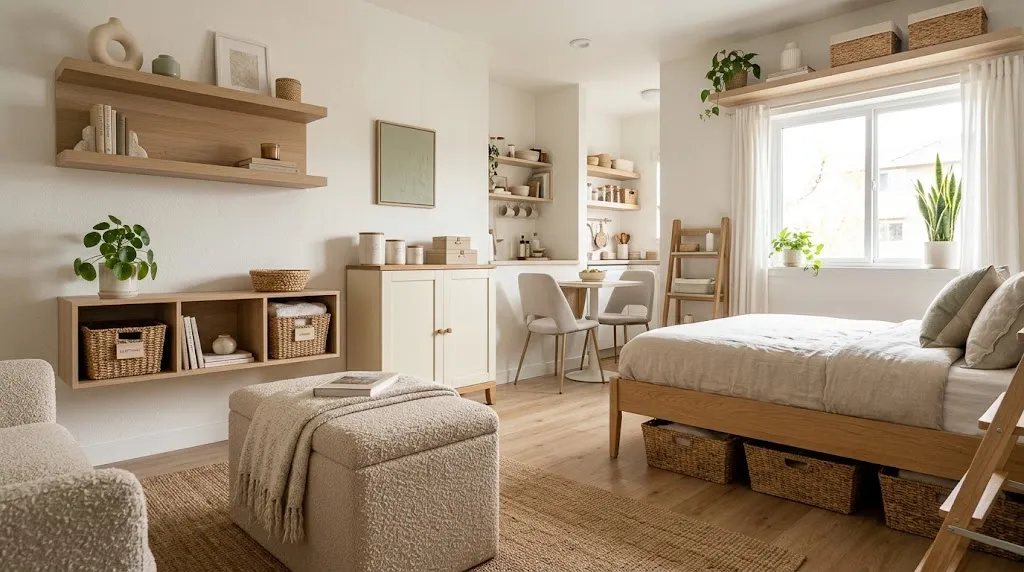
22 Smart Small Apartment Storage Ideas You’ll Love
Introduction
Living in a small apartment doesn’t mean you have to live with clutter. With the right storage solutions, even the smallest rooms can feel organized, comfortable, and stylish. The secret is to make better use of the space you already have, especially under furniture, behind doors, and along empty walls.
These small apartment storage ideas combine practical organization with attractive design. Whether you’re decorating a new home, renovating your current space, or looking for affordable ways to reduce clutter, these clever solutions can help you create a home that feels more spacious and easier to maintain.
1. Under-Bed Storage Bins
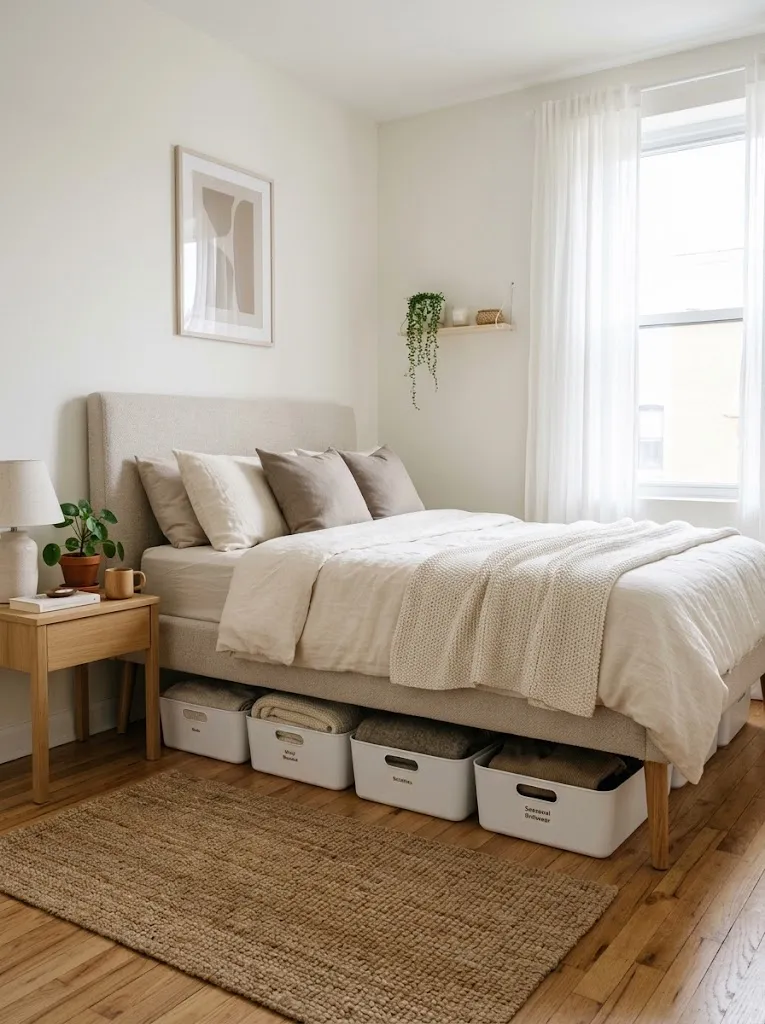
The space beneath your bed can hold far more than a few forgotten shoes. Sliding storage bins turn this often-wasted area into a practical home for extra bedding, winter clothes, handbags, and accessories without taking up valuable closet space.
Choose shallow containers with wheels so they slide out easily, even when the bed sits close to a wall. Clear bins help you find items quickly, while fabric boxes create a softer look. Measure the height beneath your bed before buying anything, and leave enough clearance for smooth movement.
2. Floating Wall Shelves
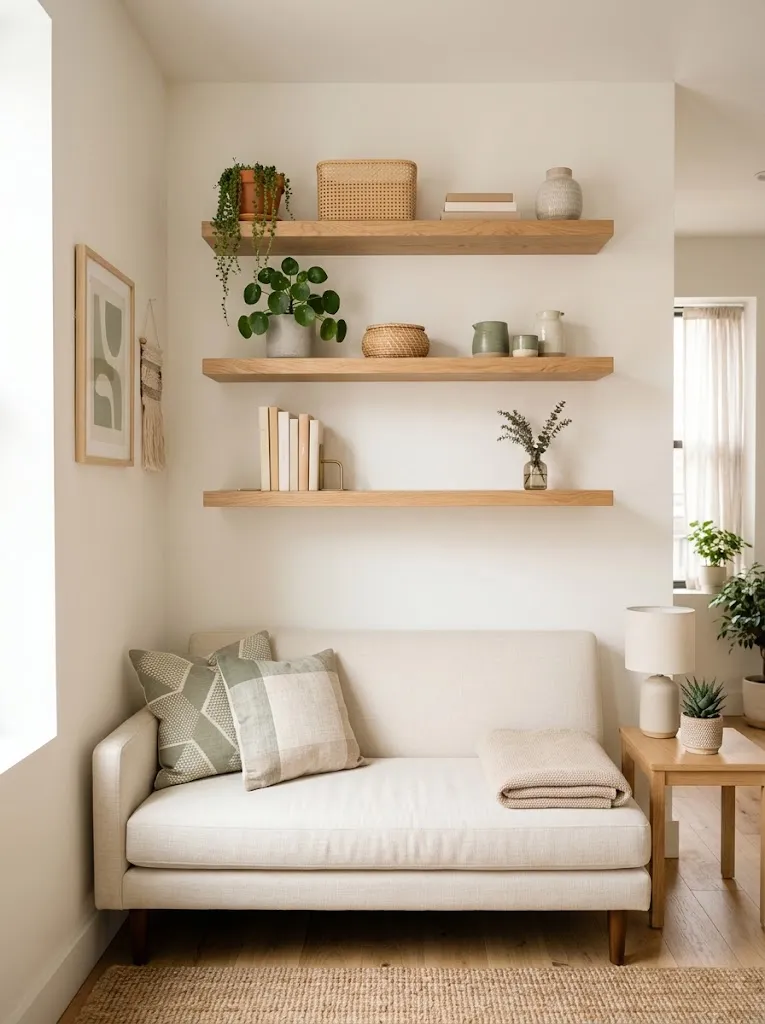
Empty walls offer valuable storage potential, especially when floor space is already limited. Floating shelves provide room for books, decorative baskets, framed photos, and everyday essentials while keeping the area beneath them open and easy to clean.
- Use vertical space: Install shelves above a desk, sofa, or entryway console.
- Group similar items: Keep books together and place smaller accessories inside matching baskets.
- Mix decor with storage: Combine useful objects with plants and framed artwork.
- Check wall support: Choose appropriate anchors or locate studs before installing heavy shelves.
- Keep frequently used items accessible: Place everyday essentials on lower shelves.
For a balanced look, leave some open space between objects instead of filling every inch. In a rental apartment, removable shelving may be an option for lightweight items, but always check your lease and the product’s weight limits before installation.
3. Storage Ottomans
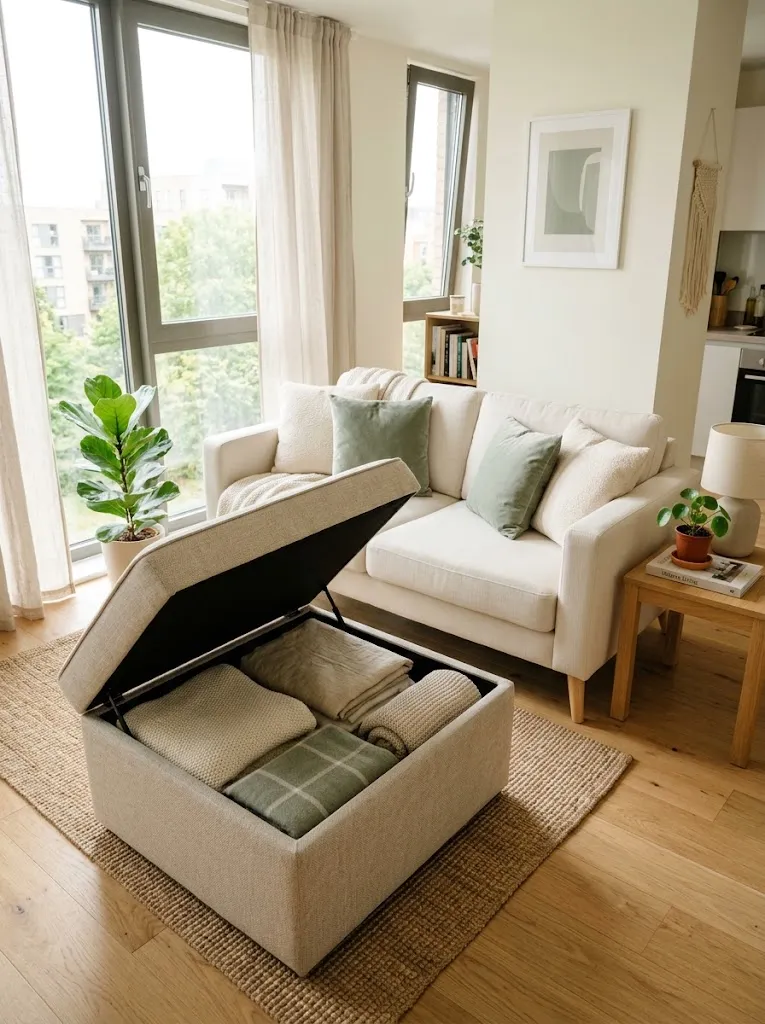
A piece of furniture that hides clutter while providing extra seating earns its place in a small home. Storage ottomans can hold spare blankets, board games, remote controls, magazines, or children’s toys while doubling as a footrest or occasional seat.
Quick Tip:
Choose an ottoman with a hinged lid if you open it daily, or a lightweight removable lid if you prefer simple access. Before purchasing, check its weight capacity and make sure its size leaves enough room to walk around it comfortably.
For the best results, match the upholstery to your sofa or rug so the ottoman feels like part of the room rather than an extra storage box. A rectangular design can also work as a coffee table when paired with a stable tray for drinks and small accessories.
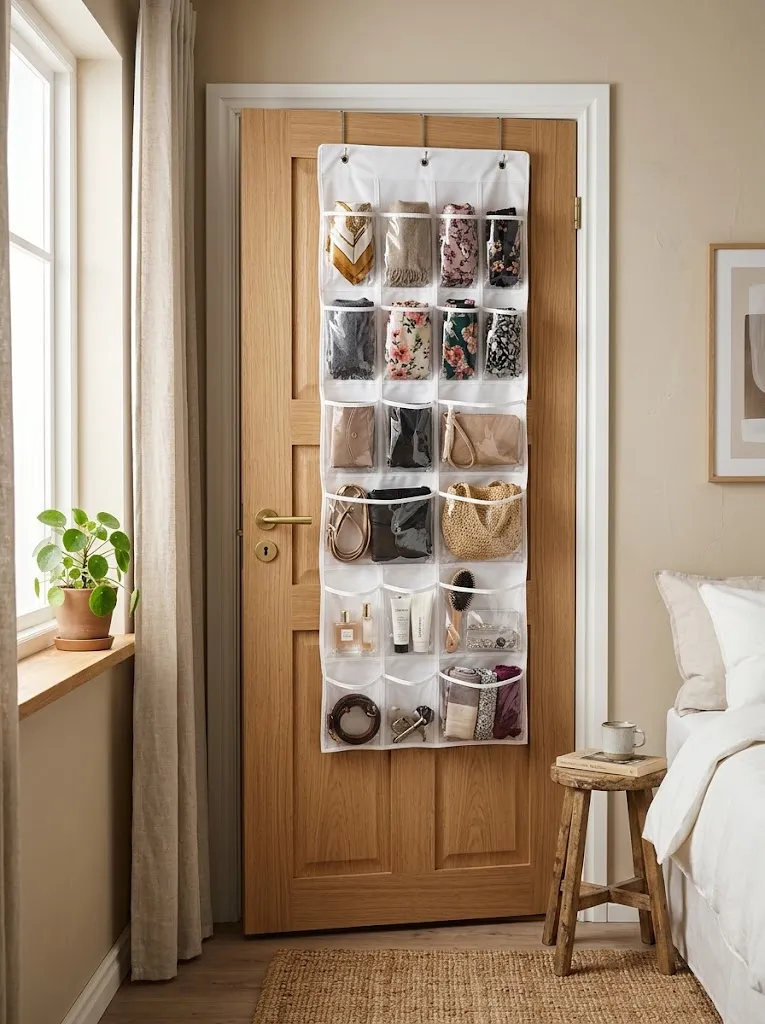
4. Over-Door Organizers
BEFORE
Small essentials often end up scattered across shelves, drawers, and countertops. Scarves, belts, cleaning supplies, and toiletries can quickly create clutter when there is no dedicated place for them.
AFTER
An over-door organizer gives these items a designated home without occupying floor space. Its pockets keep everything visible and accessible, making everyday routines quicker and reducing the temptation to leave belongings on nearby surfaces.
Choose an organizer with pockets suited to the items you plan to store. Clear pockets work well for toiletries and accessories, while sturdy fabric versions can hold lightweight clothing. Check the door’s thickness and clearance before buying, and avoid overloading the hooks. This simple addition works especially well in bedrooms, bathrooms, and utility closets.
5. Vertical Closet Dividers
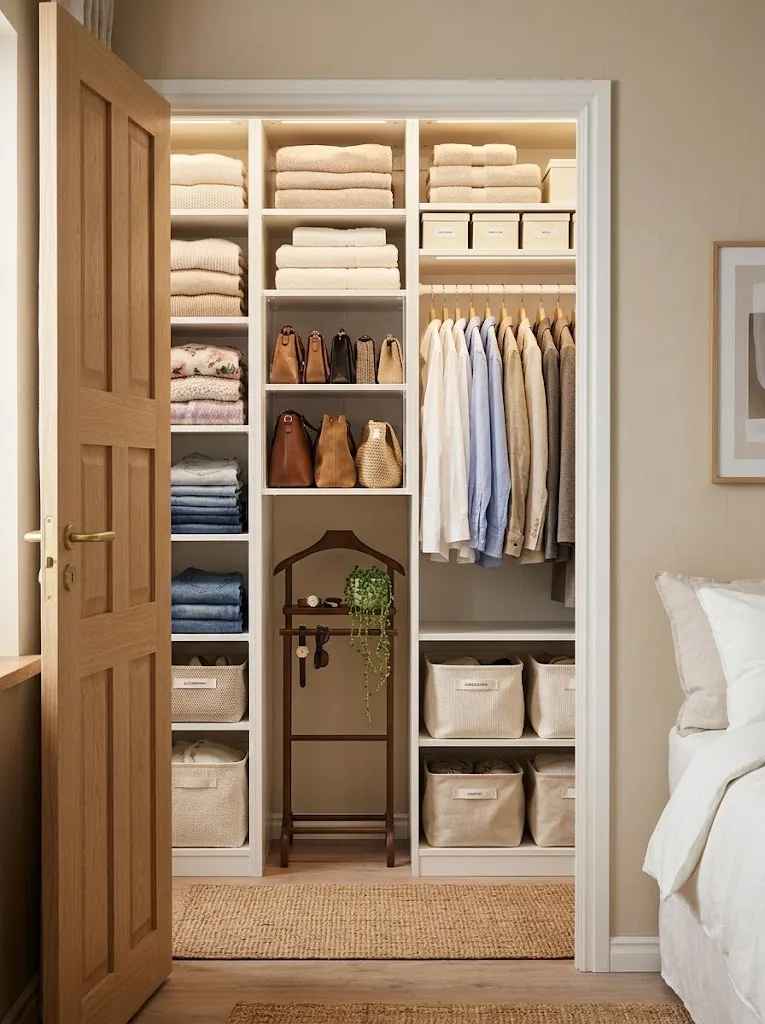
Closets become easier to manage when every stack has its own space. Vertical dividers help separate folded clothes, handbags, linens, and accessories, preventing piles from leaning over or collapsing whenever you remove something from the bottom.
- Measure the shelves: Check the width, depth, and available height before selecting dividers.
- Sort your belongings: Group clothing, handbags, towels, and other items by type.
- Position the dividers: Create sections that fit your usual folded stacks.
- Arrange items neatly: Keep heavier pieces on lower shelves and delicate accessories in separate compartments.
Adjustable dividers are useful because they can change as your storage needs evolve. Choose smooth-edged materials that will not snag clothing, and leave enough room to remove items without disturbing neighboring stacks. Even a narrow closet can feel more functional when everything stays upright and easy to find.
6. Wall-Mounted Hooks vs Floor Racks
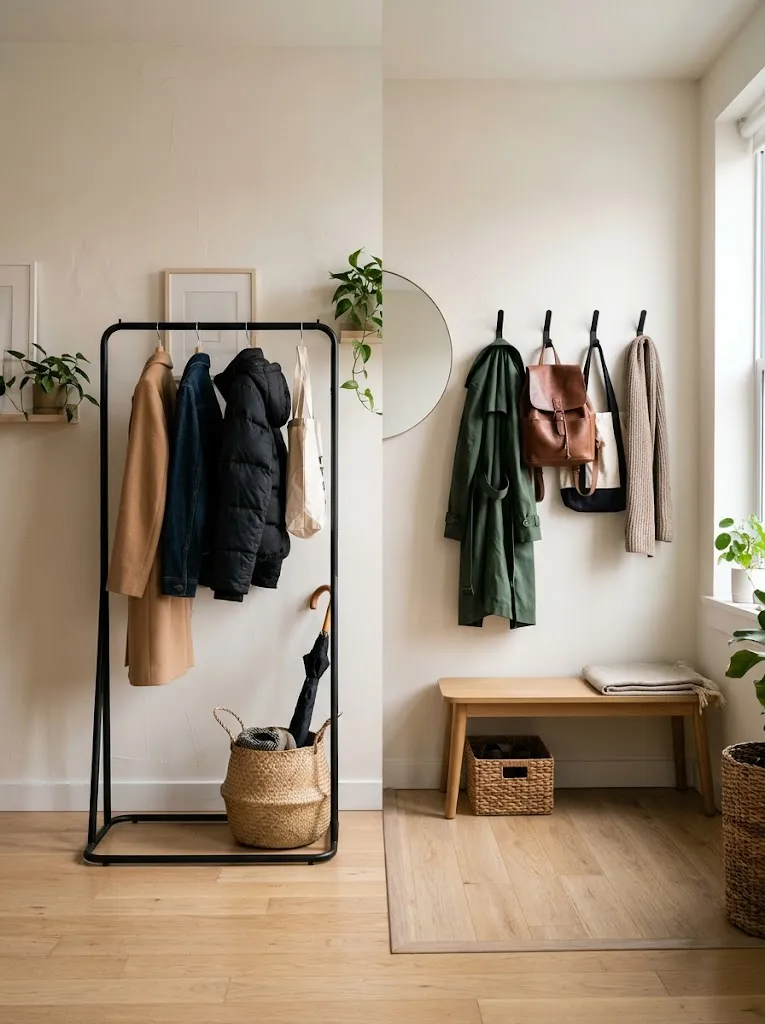
| Comparison | Freestanding Rack | Wall-Mounted Hooks |
| Floor space | Takes up walking room | Keeps the floor clear |
| Installation | Usually requires no drilling | May require screws or suitable anchors |
| Storage capacity | Can hold several items | Depends on the number and strength of hooks |
| Best placement | Larger entryways | Narrow halls and compact entrances |
| Flexibility | Easy to move | Fixed once installed |
When floor space is scarce, wall-mounted hooks can make a noticeable difference in how open your entryway feels. Use them for everyday coats, handbags, hats, and reusable shopping bags, while keeping less frequently used belongings elsewhere. Choose hooks rated for the intended weight, and check your lease before drilling into rental walls.
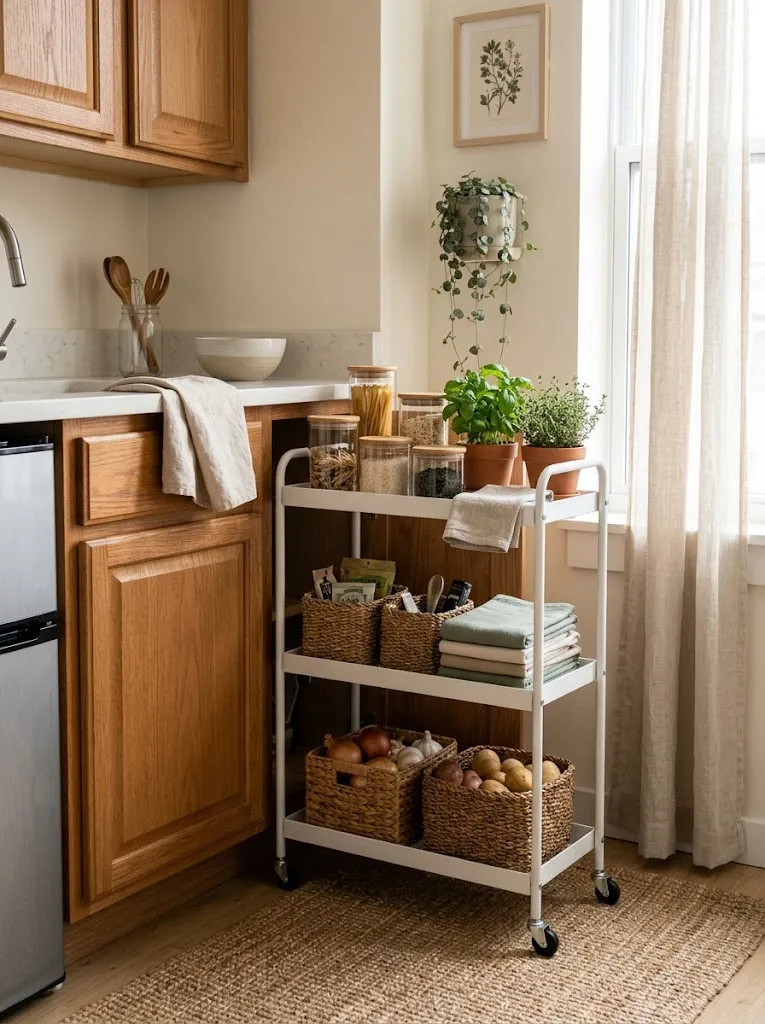
7. Rolling Storage Carts
DO:
- Choose a narrow cart that fits beside your refrigerator, sofa, or bathroom vanity.
- Assign each tier a purpose, such as snacks, cleaning supplies, or toiletries.
- Use small baskets to keep loose items organized.
- Check the wheel locks to prevent unwanted movement.
DON’T:
- Block doorways or narrow walking paths with the cart.
- Overload the top shelf with heavy objects.
- Mix unrelated items on every tier.
- Leave frequently used supplies buried at the bottom.
A rolling cart is especially useful when your apartment lacks a pantry or extra cabinets. I’ve noticed that giving everyday supplies their own dedicated levels makes small rooms easier to maintain. Choose a design with smooth-rolling wheels and a handle, so you can move it when cleaning or rearranging furniture.
8. Bedside Storage Pockets
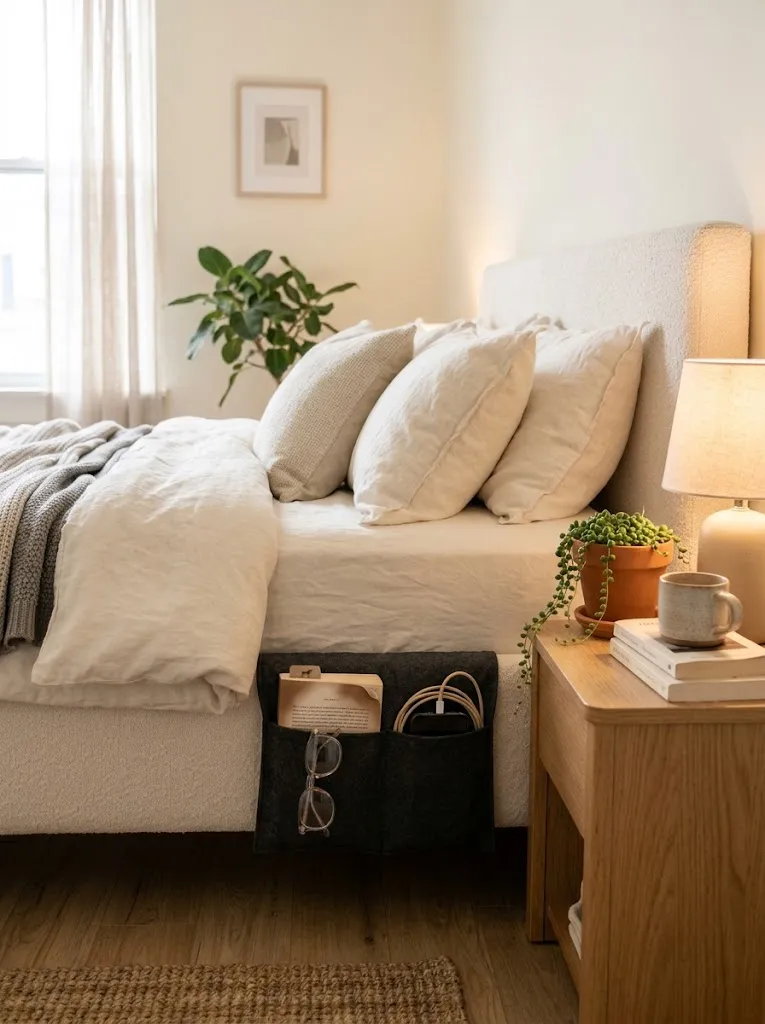
Cost: Low | Time: 5 to 10 minutes | Skill Level: Beginner | Best For: Bedrooms without nightstands
A bedside pocket keeps nighttime essentials close without requiring a traditional bedside table. It works particularly well beside narrow beds where even a small cabinet would obstruct the walkway.
Look for a sturdy fabric organizer with separate compartments for your phone, glasses, books, and remote controls. Secure its mounting panel beneath the mattress or according to the manufacturer’s instructions, ensuring it stays firmly in place. Keep charging cables away from pinch points and damaged electrical connections. For a coordinated bedroom, choose a neutral fabric that complements your bedding rather than adding another busy pattern.
9. Kitchen Cabinet Door Racks
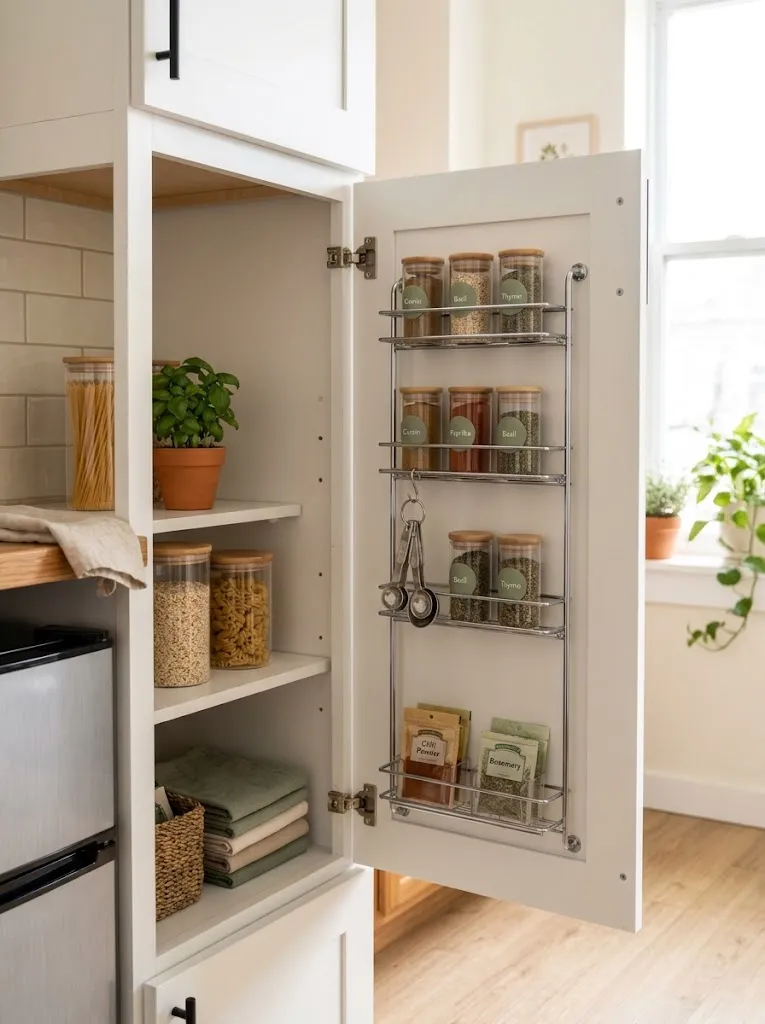
A kitchen cabinet door can provide useful storage that often goes unnoticed. A compact rack keeps spices, measuring spoons, wraps, and lightweight cooking supplies accessible without crowding your countertops or main shelves.
Measure the cabinet interior before choosing a rack, and check that the door closes completely when the rack is loaded. Keep heavier items on sturdy shelves rather than lightweight adhesive organizers. Also check for hinges, pipes, and stored objects that could interfere with the rack. This solution is particularly helpful in small kitchens where every shelf needs to serve a clear purpose.
10. Slim Entryway Shoe Cabinets
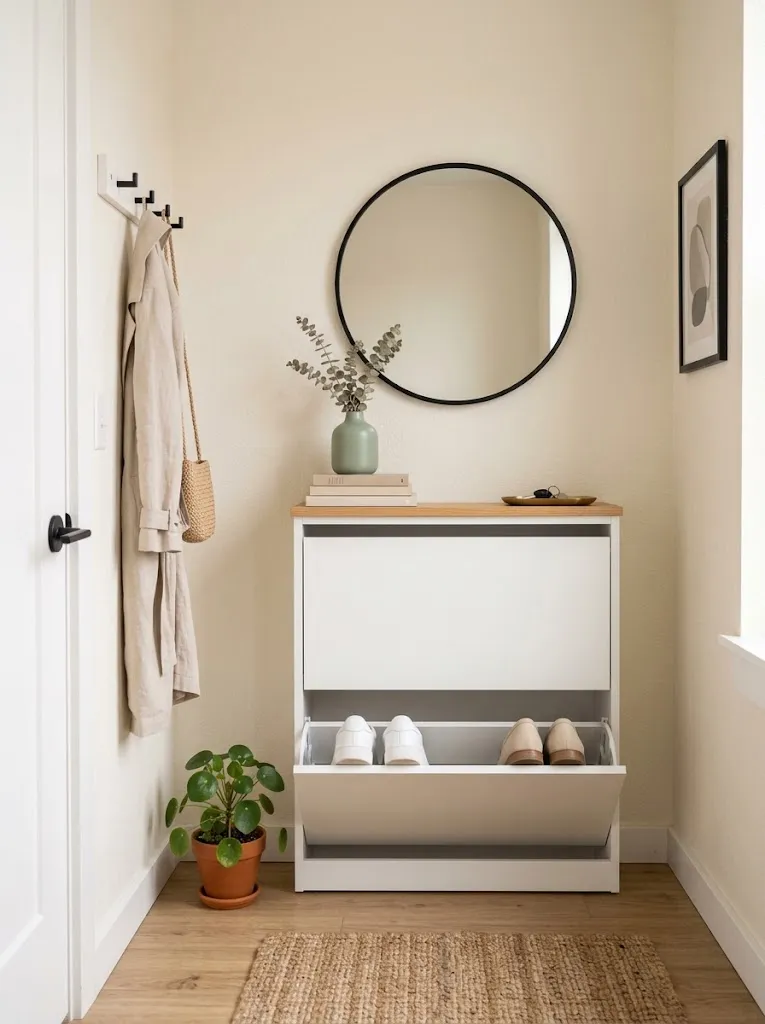
A narrow shoe cabinet can keep an entryway tidy without taking over the walkway. Instead of leaving sneakers, sandals, and everyday shoes scattered beside the door, store them behind slim tilt-out compartments that make use of vertical space.
- Measure your walkway: Choose a cabinet that allows comfortable passage when doors are closed.
- Sort your footwear: Keep daily shoes near the entrance and move seasonal pairs elsewhere.
- Use the top surface: Add a small tray for keys and sunglasses.
- Keep it lightweight: Limit decorative objects so the cabinet remains practical.
- Check ventilation: Allow damp shoes to dry before storing them in enclosed compartments.
For a polished look, match the cabinet to your wall color or nearby furniture. A wall mirror above it can also make the entrance feel brighter. If your apartment has a very narrow hallway, measure the cabinet depth carefully before purchasing.
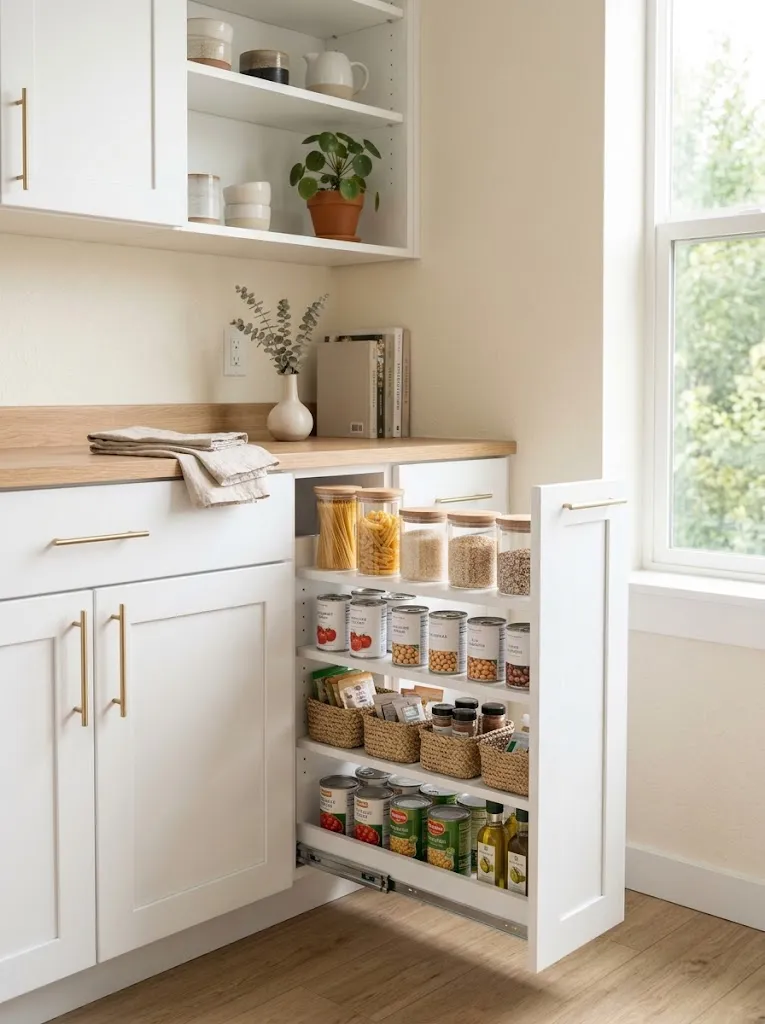
11. Pull-Out Pantry Drawers
Quick Tip:
Group pantry items by category before organizing the shelves. Keep frequently used ingredients near the front, place heavier jars on lower levels, and use clear containers with readable labels to identify dry goods quickly.
Pull-out drawers make deep cabinets easier to use because you can reach items at the back without moving everything in front. If your kitchen already has suitable cabinets, removable sliding baskets may offer a simpler alternative to a full renovation. Check the cabinet measurements, drawer weight limits, and plumbing clearance before installing any hardware. A well-organized pantry also helps you spot duplicate purchases and use ingredients before they expire.
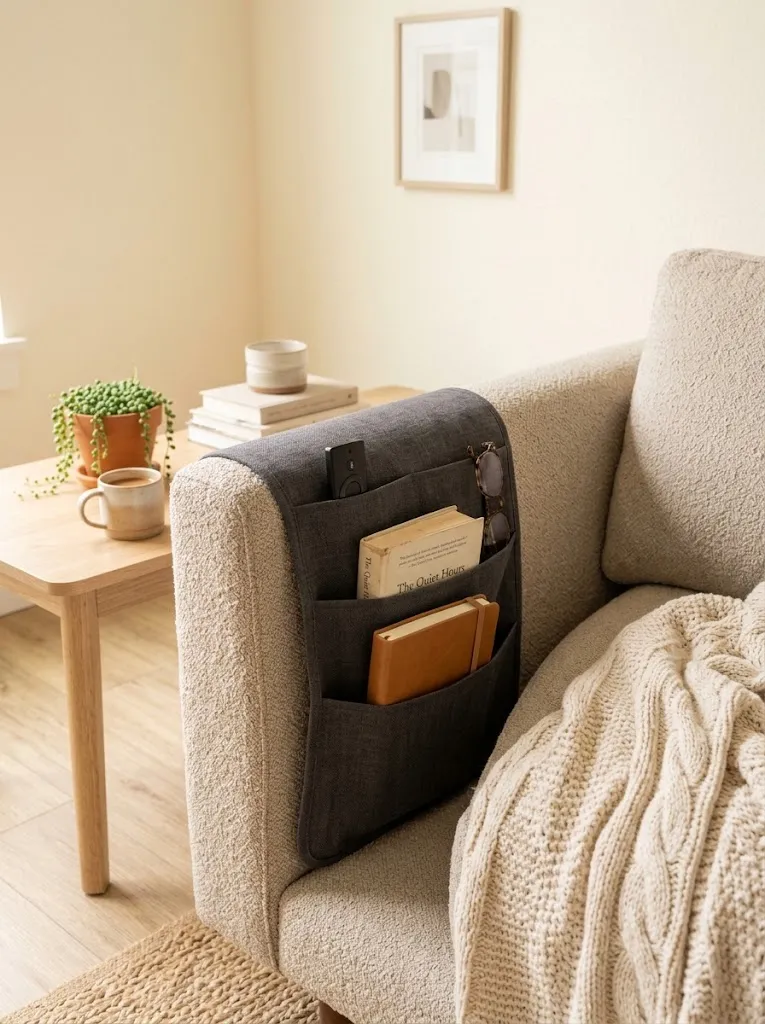
12. Sofa-Arm Organizers
BEFORE
Remote controls disappear between cushions, magazines pile up on the coffee table, and reading glasses seem to have no permanent home. In a small living room, these little items can make the entire seating area feel untidy.
AFTER
A sofa-arm organizer gives everyday essentials a dedicated place within easy reach. Its slim pockets reduce clutter on tables and help keep the seating area ready for relaxing, reading, or entertaining guests.
Choose a design with a weighted flap or nonslip backing so it stays in position when you sit down. Measure your sofa arm before ordering, especially if it has a rounded shape or thick upholstery. Store lightweight items in the pockets, and avoid placing drinks in compartments that could tip over. This practical accessory works particularly well when your living room has no space for a side table.
13. Fold-Down Wall Desks
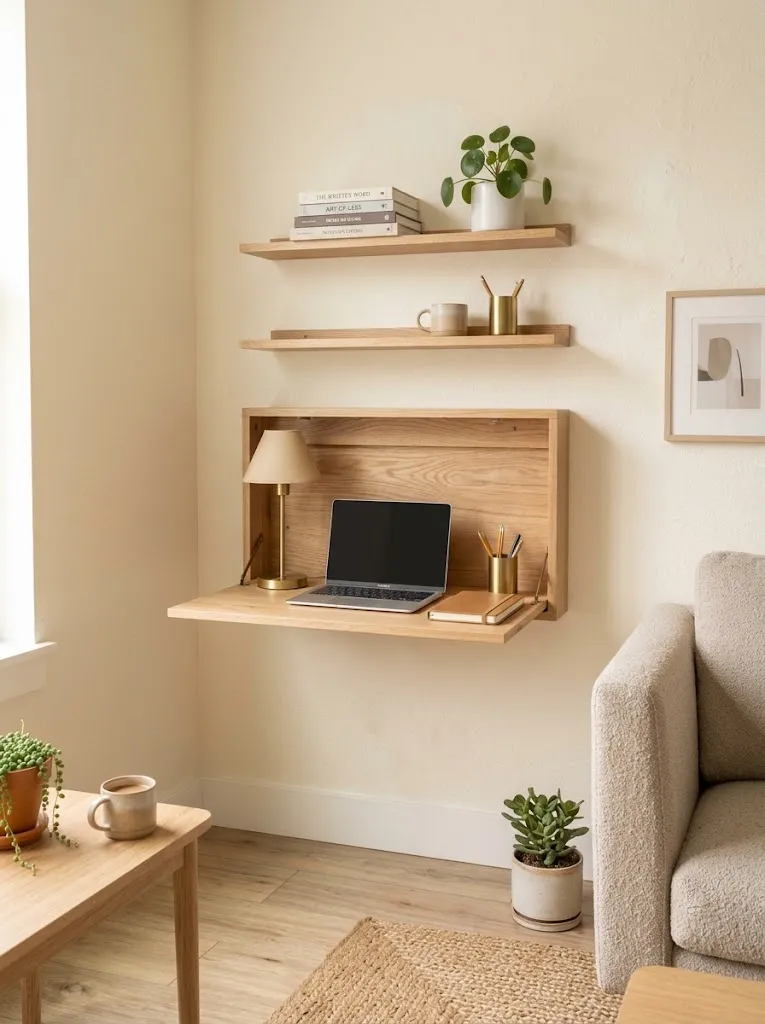
- Choose the right wall: Find a location with enough clearance for the desk to open fully without blocking a doorway.
- Measure your workspace: Check the desk dimensions and confirm that the surface suits your laptop or work materials.
- Secure the mounting hardware: Follow the manufacturer’s instructions and use suitable wall anchors or studs.
- Organize vertically: Add a small shelf or wall organizer for stationery and documents.
A fold-down desk gives you a useful work surface without permanently sacrificing floor space. When your workday ends, fold it away to reopen the room for other activities. I’ve found that compact work areas stay more manageable when only essential supplies remain on the surface. Choose a model with a reliable locking mechanism and a weight rating suitable for your equipment.
14. Stackable Clear Storage Boxes
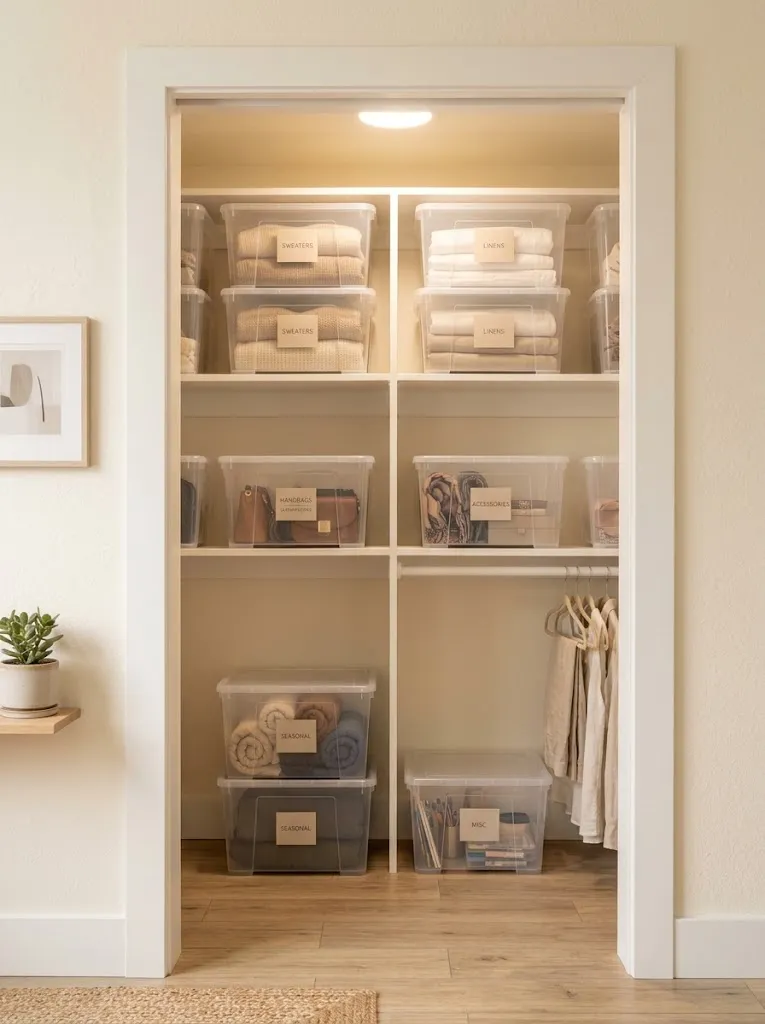
| Comparison | Unlabeled Boxes | Labeled Clear Boxes |
| Finding items | Requires opening containers | Contents are visible immediately |
| Stacking | May become disorganized | Matching shapes stack neatly |
| Seasonal storage | Items can be forgotten | Categories remain easy to identify |
| Appearance | Mixed containers can look cluttered | Uniform boxes create a tidy finish |
Clear storage boxes help you make better use of closet shelves, wardrobe tops, and under-bed spaces. Choose stackable containers with secure lids, and group similar belongings together before filling them. Labels are still useful for items that look alike, such as cables or seasonal accessories. Keep heavier boxes at the bottom and avoid stacking beyond the manufacturer’s recommended limit.
15. Bathroom Corner Shelves
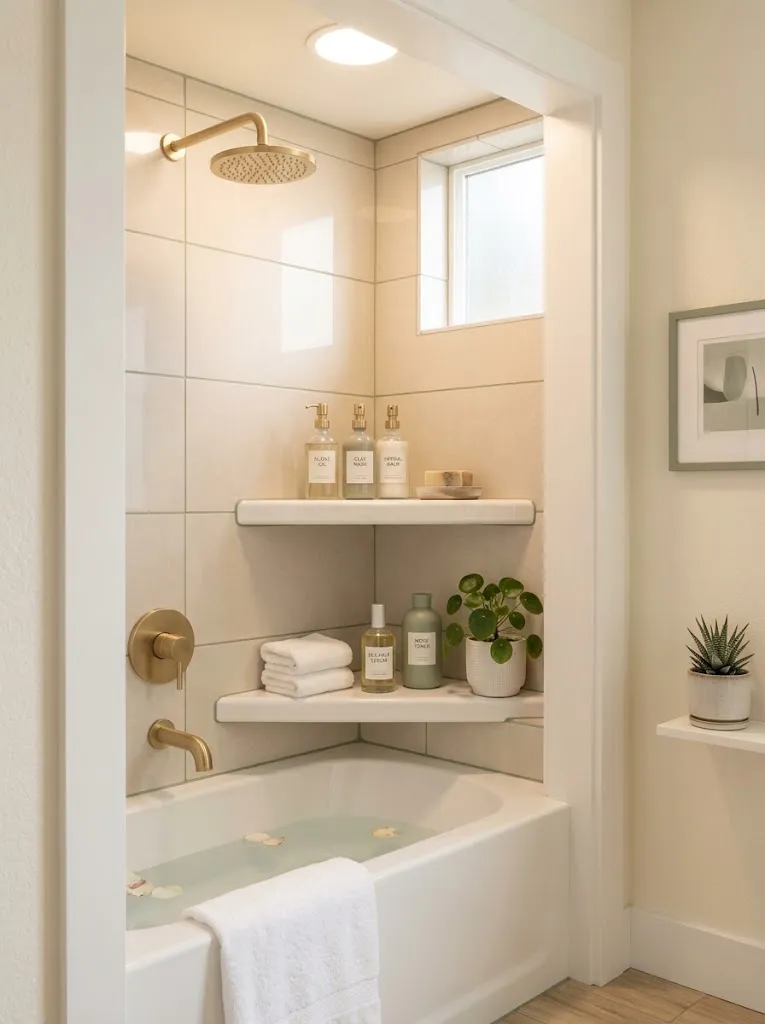
DO:
- Install shelves in unused corners away from areas where they obstruct movement.
- Choose moisture-resistant materials such as suitable coated metal, glass, or bathroom-grade plastic.
- Store everyday toiletries on the easiest-to-reach shelf.
- Use a small tray to group bottles and prevent minor spills.
DON’T:
- Place shelves where they interfere with shower controls or doors.
- Overload adhesive shelves beyond their stated weight capacity.
- Store electrical appliances near water.
- Leave standing water beneath bottles or on shelf surfaces.
Corner shelves make use of awkward bathroom spaces that might otherwise remain empty. They can hold shampoo, skincare products, spare soap, and folded washcloths while freeing the sink area for daily routines. Check that the chosen material suits your bathroom’s humidity, and follow installation instructions carefully. In a rental, removable options may work well for lightweight products.
16. Behind-the-Door Shelving
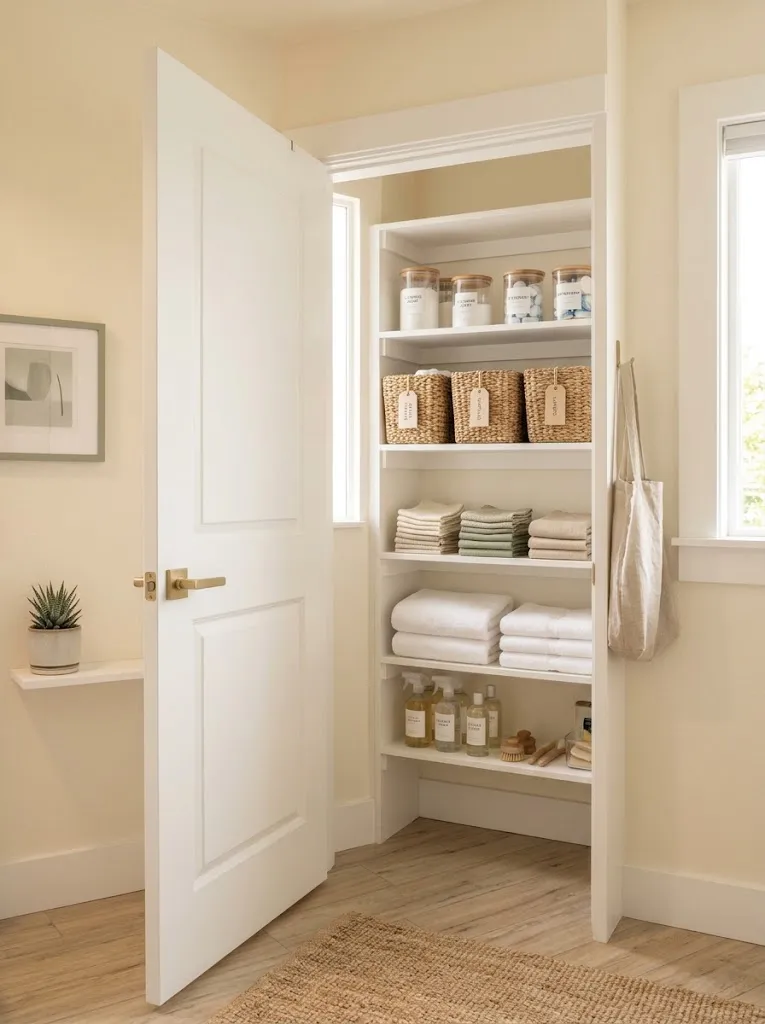
Cost: Moderate | Time: 1 to 3 hours | Skill Level: Beginner to intermediate | Best For: Utility areas and small closets
The narrow space behind a door can provide useful storage when ordinary shelves and cabinets are already full. A slim shelving unit can hold toiletries, cleaning supplies, pantry extras, or folded linens without spreading belongings across the room.
Measure the available depth carefully, including the door handle and the space needed for the door to swing freely. Choose a stable unit that fits securely against the wall, and anchor tall shelving according to the manufacturer’s instructions. Keep heavier objects on lower shelves and place frequently used items at a comfortable height. This arrangement works best when the door can open fully without hitting stored belongings.
17. Window Seat Storage Benches
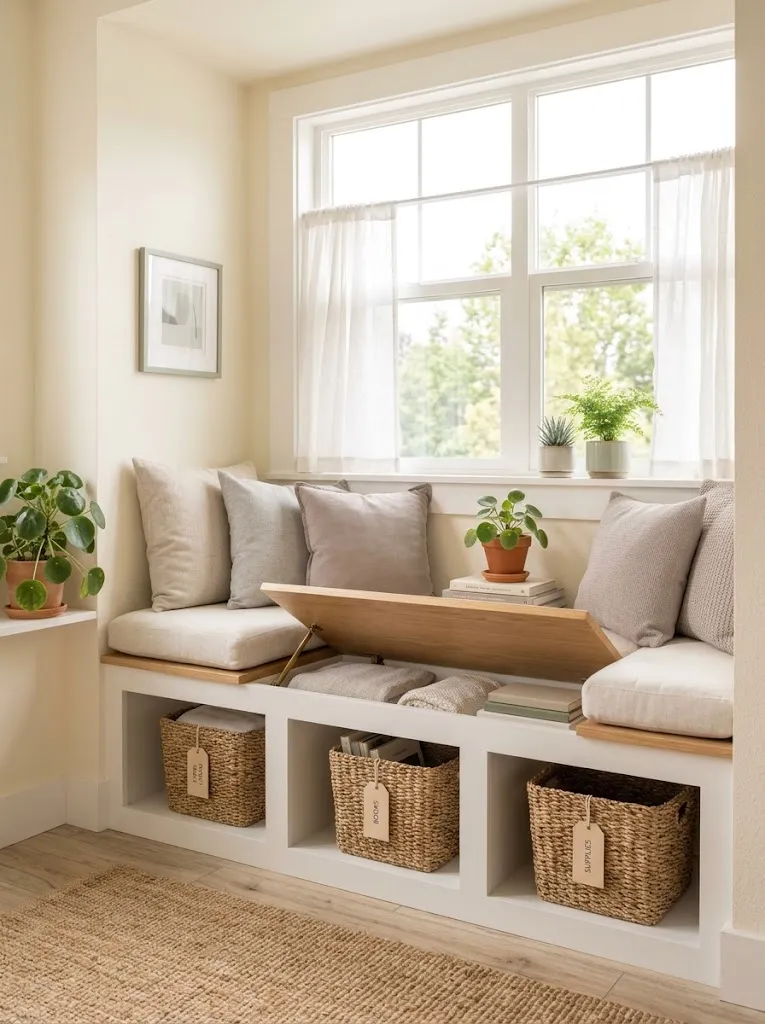
A window seat can provide both a comfortable place to relax and valuable hidden storage. The space beneath the cushion can hold extra blankets, board games, books, or seasonal accessories that would otherwise occupy closet shelves.
- Measure the window area: Check the available width, depth, and height before choosing a bench.
- Select the right storage style: Hinged lids hide clutter, while open cubbies provide quicker access.
- Add a supportive cushion: Choose a removable cover that is easy to wash.
- Use baskets inside open compartments: Matching baskets keep smaller items grouped neatly.
- Keep the window accessible: Avoid blocking window locks, vents, or emergency exits.
If you’re renovating, a custom bench can make excellent use of an awkward alcove. For a simpler update, choose a freestanding storage bench that fits beneath the window. Keep heavy items stored low, and ensure the lid has safe hinges or supports if children will use the seating area.
18. Multi-Functional Coffee Tables
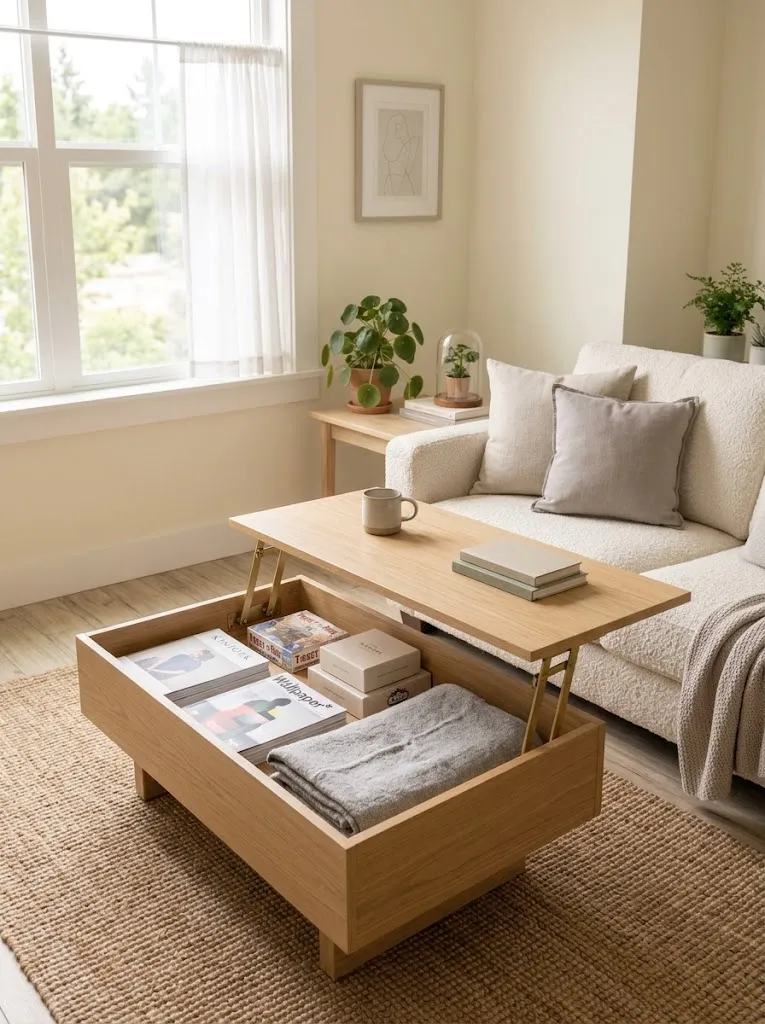
| Comparison | Standard Coffee Table | Storage Coffee Table |
| Storage capacity | Mainly holds surface items | Offers hidden or built-in storage |
| Living room clutter | Remotes and magazines stay visible | Everyday essentials can be tucked away |
| Function | Primarily a tabletop | May include a lift-top work surface |
| Best use | Rooms with separate storage | Compact apartments with limited cabinets |
A storage coffee table helps your living room work harder without adding another piece of furniture. Use its compartments for remote controls, magazines, charging accessories, or board games, keeping the tabletop available for drinks and everyday activities.
A lift-top design can also provide a convenient surface for working on a laptop or eating a casual meal. Before buying, check that the table opens comfortably around your sofa and leaves enough room to walk through the seating area. Keep heavy objects away from moving hinges, and choose a design that suits your existing furniture scale.
19. Pegboard Wall Organizers
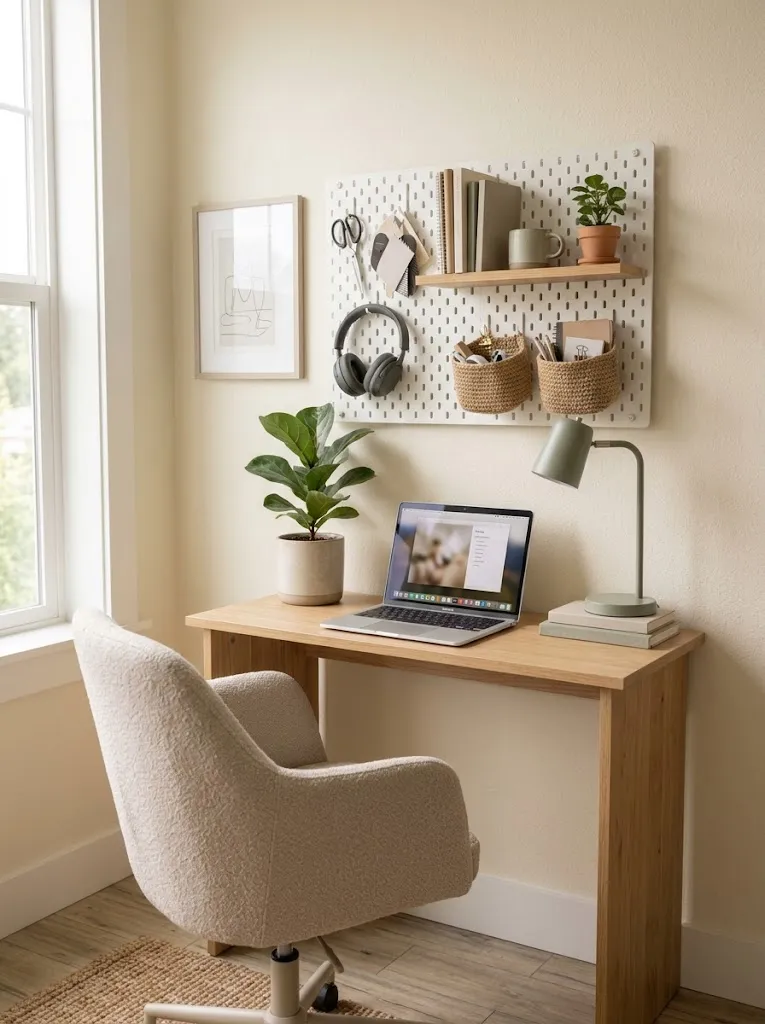
Quick Tip:
Arrange your pegboard around the items you use most often. Place frequently needed tools at eye level, group smaller supplies in baskets, and leave a little open space so the board remains easy to use.
A pegboard turns an empty wall into flexible storage that can change as your needs evolve. It works well for office supplies, craft materials, kitchen tools, and lightweight accessories. Choose a board and mounting system rated for your intended load, and secure it properly to the wall. For a cohesive appearance, keep baskets and hooks in two or three matching finishes rather than mixing too many colors.
20. Drawer Organizer Inserts
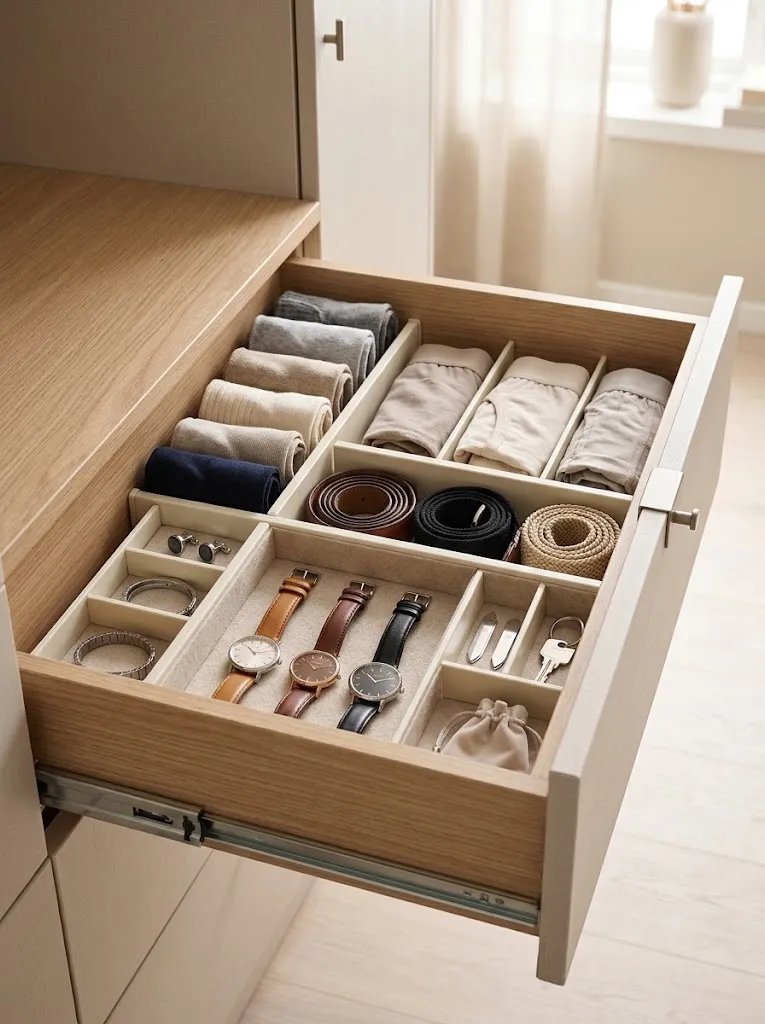
BEFORE
Small items get mixed together inside crowded drawers. Finding a matching pair of socks or a particular accessory means shifting everything around, and the drawer gradually becomes harder to manage.
AFTER
Individual compartments give each category a designated place. Socks stay together, accessories remain separated, and the drawer becomes easier to maintain because items are less likely to spill into neighboring sections.
Start by emptying one drawer and removing anything you no longer use. Measure its interior before buying adjustable dividers or compartment trays. Group belongings by type, then assign each section a realistic amount of space. Avoid packing compartments too tightly, since easy access matters more than fitting every possible item inside. This small improvement is especially helpful for bedroom dressers, bathroom vanities, and desk drawers.
21. Ceiling-Height Storage Cabinets
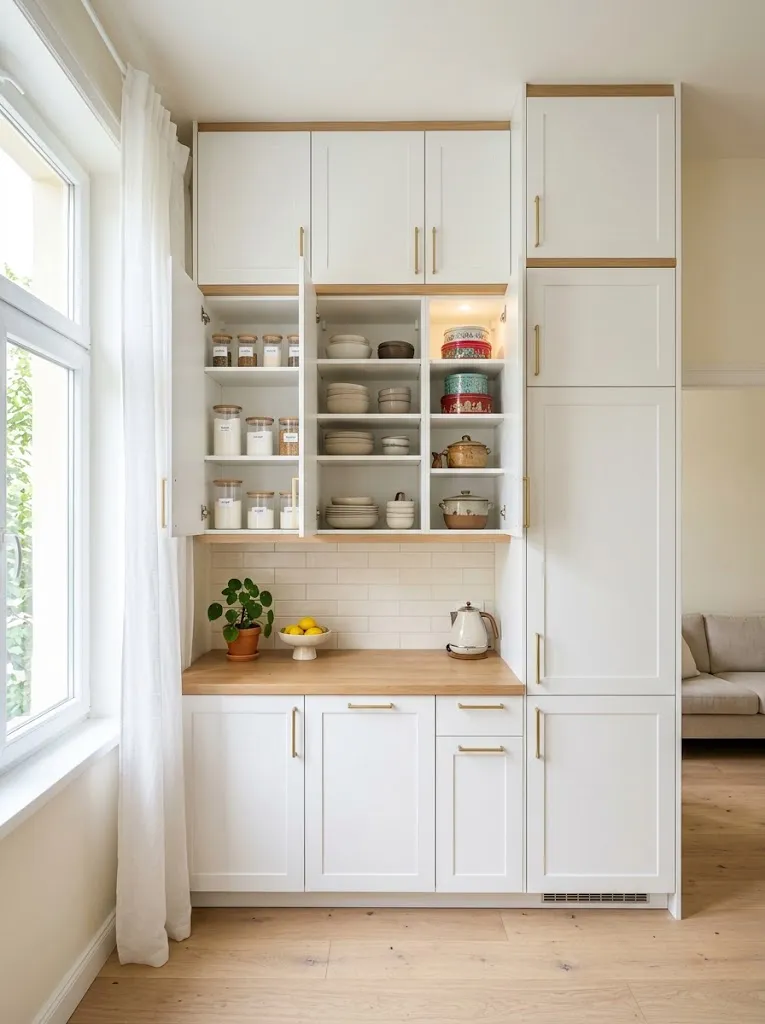
- Measure the ceiling height: Check for vents, pipes, and uneven surfaces before planning tall cabinetry.
- Store items by frequency: Keep everyday dishes within easy reach and reserve upper cabinets for seasonal or occasional-use belongings.
- Use matching containers: Place lightweight items in labeled bins to keep upper shelves organized.
- Plan safe access: Use a stable step stool when necessary, and never climb on countertops or shelves.
Tall cabinets make use of vertical space that shorter furniture leaves unused. They can be particularly valuable in compact kitchens, bedrooms, and utility rooms where floor space is limited. If you’re renovating, consider custom cabinetry that reaches the ceiling. For an existing apartment, tall freestanding cabinets may provide similar benefits, provided they fit safely and are secured against tipping when required.
22. Hidden Storage Headboards
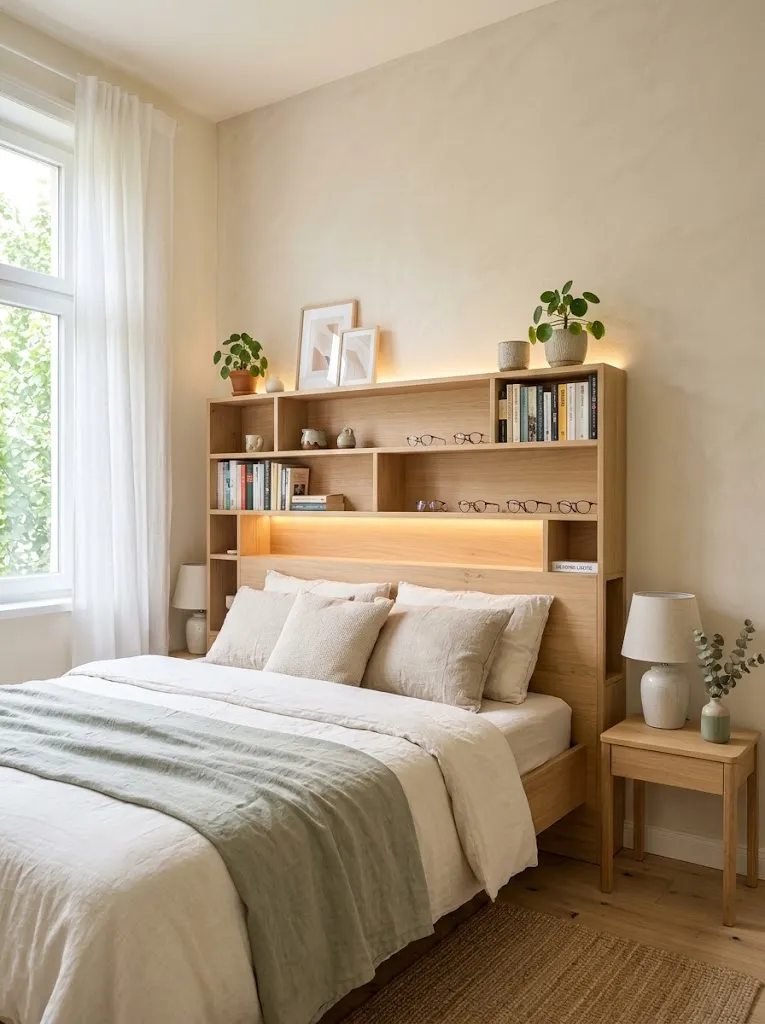
A headboard with built-in storage can replace bulky bedside tables while keeping bedroom essentials close at hand. Hidden compartments provide space for books, charging accessories, spare glasses, and other small belongings without adding extra furniture to an already crowded room.
Choose a headboard with compartments that suit your daily habits. Open niches work well for books and decorative objects, while concealed compartments keep personal items out of sight. Measure your bed frame and wall clearance before purchasing, and make sure any charging cables can be routed safely. For a cohesive bedroom, coordinate the headboard’s finish with your bed frame or wardrobe.
The result is a cleaner bedside area with more room to move, making this option especially useful in narrow bedrooms and studio apartments.
Frequently Asked Questions
1. How can I add more storage to a small apartment?
Use vertical wall space, under-bed storage bins, over-door organizers, and multi-functional furniture to create extra storage without taking up valuable floor space. Declutter regularly and give everyday items a designated place to keep your apartment organized.
2. What is the best furniture for small apartment storage?
The best options include storage ottomans, beds with drawers, lift-top coffee tables, storage benches, and fold-down desks. These pieces serve more than one purpose, helping you save space while keeping everyday belongings out of sight.
3. How can I organize a small apartment on a budget?
Start with affordable storage baskets, clear plastic bins, drawer dividers, wall hooks, and repurposed containers. Use the space you already have before buying new furniture, and look for simple DIY solutions that make unused corners more functional.
4. How do I maximize storage in a small bedroom?
Make use of the space under your bed, add floating shelves above your desk or bedside table, use slim hangers in your closet, and organize drawers with dividers. A storage headboard or bedside organizer can also keep essentials within reach without crowding the room.
5. How can renters add storage without damaging walls?
Choose freestanding shelves, over-door organizers, tension rods, rolling carts, and furniture with built-in storage. Removable adhesive hooks may also help with lightweight items when used according to the manufacturer’s instructions. Always check your lease before installing permanent fixtures.
Conclusion
Living in a small home doesn’t mean you have to sacrifice comfort, style, or organization. With these 22 smart small apartment storage ideas, you can make the most of every corner, reduce clutter, and create a home that feels more spacious and inviting. From under-bed storage bins to multifunctional furniture, even small changes can make everyday living easier.
If you’re looking for more ways to make your apartment stylish and functional, explore our guide to small apartment decorating ideas for practical inspiration on arranging furniture, decorating compact rooms, and making the most of your space. Start with the storage solutions that fit your needs and budget, and build a home that feels organized, comfortable, and uniquely yours.
One Comment