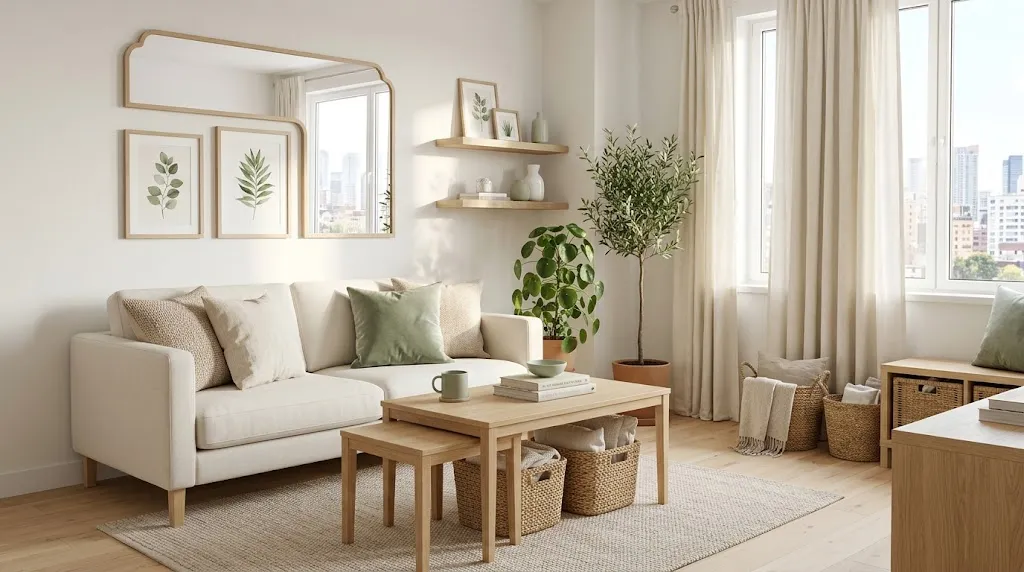
23 Genius Small Apartment Decorating Ideas to Try Now
Introduction
Small spaces can feel stylish, comfortable, and organized without a major renovation. The right small apartment decorating ideas can help you make every corner work harder while keeping your home personal and inviting.
Whether you’re renting a studio, furnishing a compact apartment, or simply struggling with limited floor space, small changes can have a noticeable impact. From floating furniture and vertical plants to hidden storage, flexible seating, and clever lighting, these ideas focus on practical solutions that also look beautiful.
In my experience, the biggest improvement often comes from changing how you use the space rather than buying more things. You’ll find simple decorating ideas here that are easy to adapt, renter-friendly, and useful for everyday living. Save your favorites as you go, because you may want to revisit them when you’re ready for your next room refresh.
Float Furniture Away From Walls
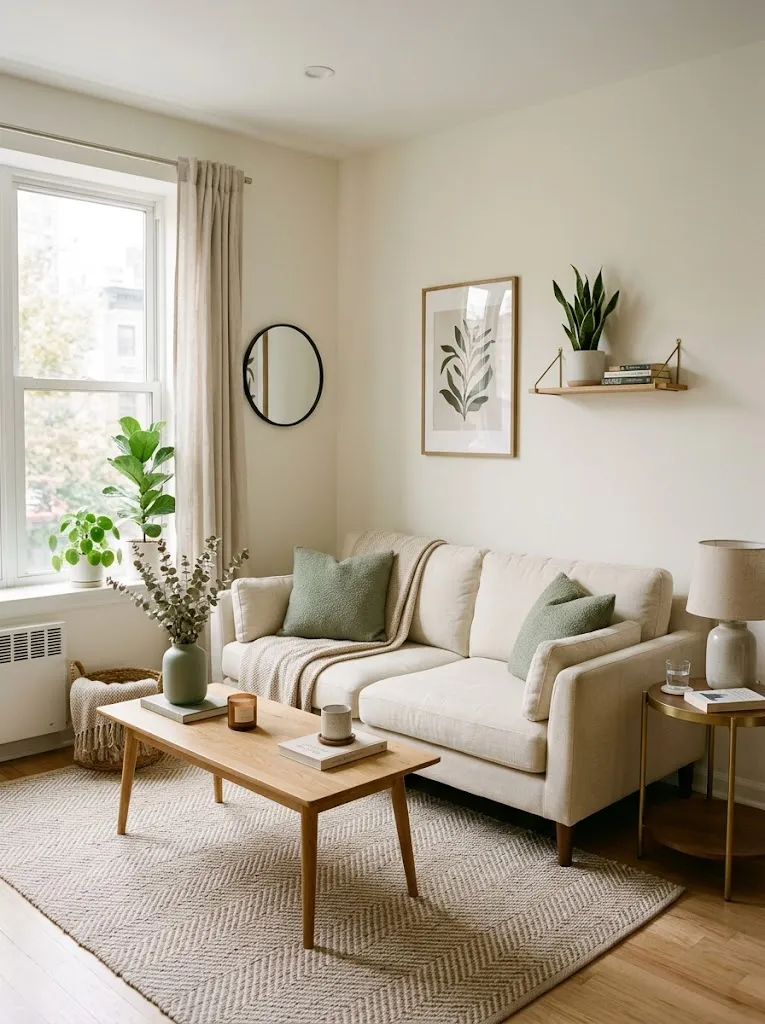
The furniture layout can make a compact room feel either cramped or surprisingly open. Pulling your sofa a few inches away from the wall creates breathing room and gives the seating area a more intentional shape. Even a narrow gap can make the floor plan feel less crowded.
In my experience, floating furniture works especially well when the sofa faces a rug, coffee table, or media console. Keep walkways at least 24 to 30 inches where possible, and avoid blocking doors or heating vents. The goal is not more furniture, but better spacing between what you already own.
Layered Area Rugs
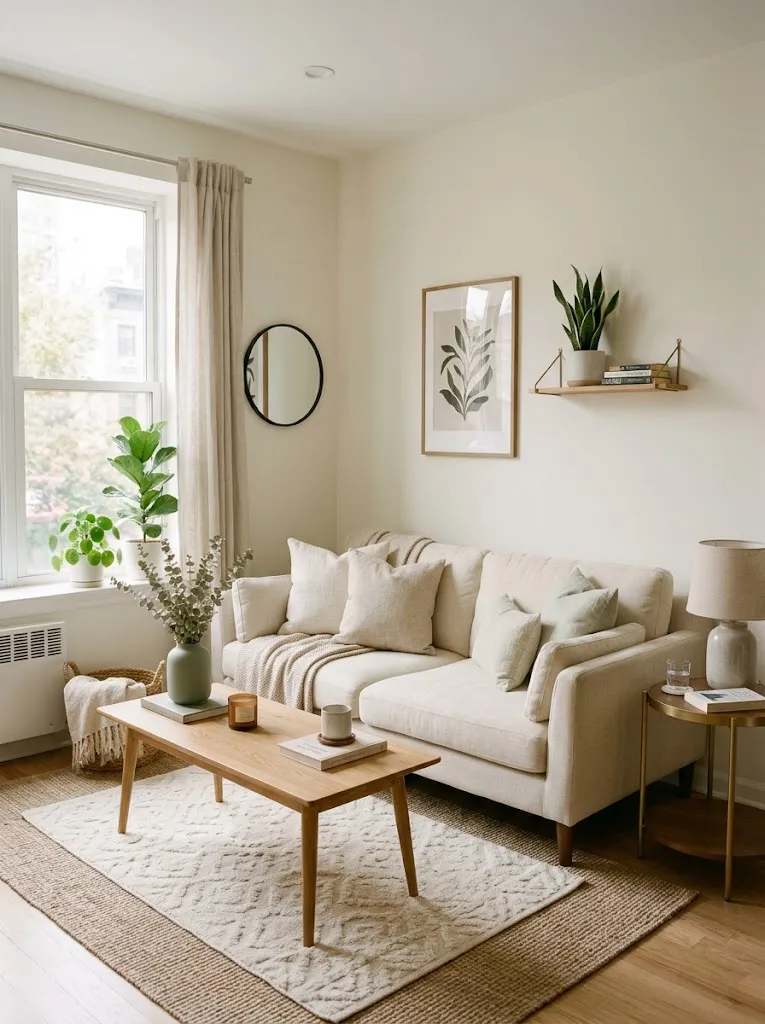
- Start with a large neutral base rug to visually anchor the seating area.
- Layer a smaller patterned or textured rug on top for definition.
- Keep the lower rug simple so the room does not feel visually busy.
- Leave enough exposed flooring around the edges to maintain an open appearance.
- Use similar tones across both rugs for a cohesive finish.
Layering rugs adds depth without requiring another bulky piece of furniture. It also helps define separate zones in an open apartment, such as a living area beside a dining corner. Choose low-pile styles that are easy to clean and place furniture legs partly on the rugs for a grounded arrangement.
Vertical Plant Displays
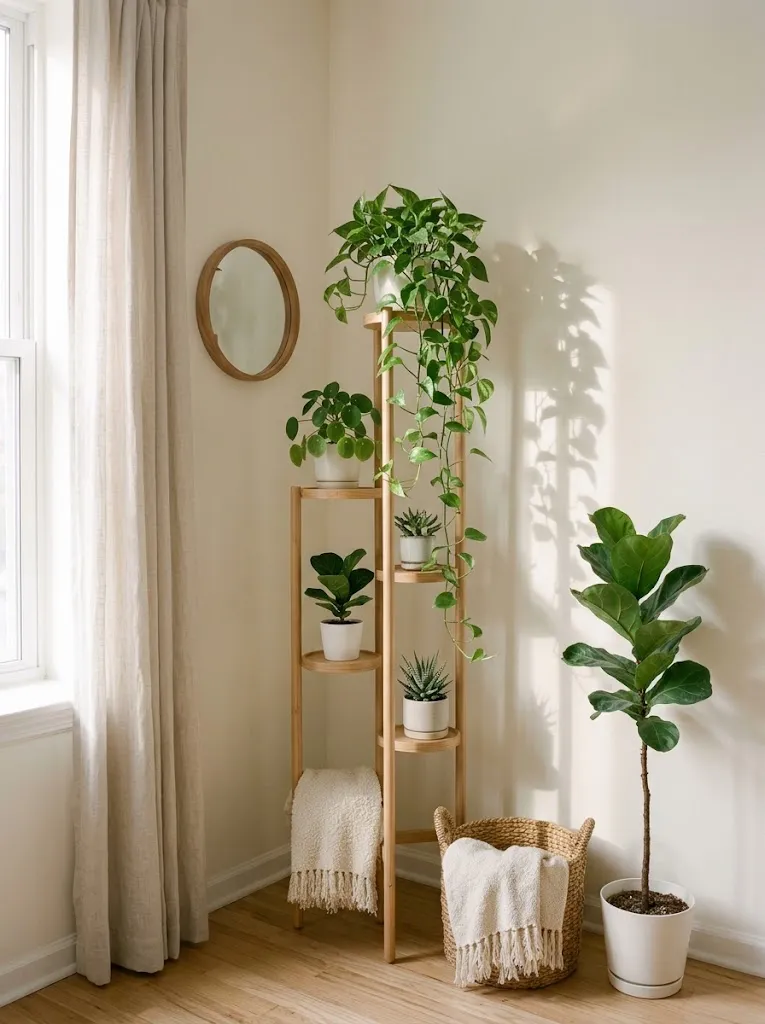
Quick Tip: Use height instead of floor space when bringing greenery into a compact home. Place trailing plants on a narrow stand, floating shelf, or tall plant ladder. Choose containers that match your existing decor so the display feels intentional rather than cluttered.
Vertical greenery draws the eye upward and makes unused wall height part of the room’s design. I’ve noticed that one tall plant paired with two smaller plants usually feels more balanced than filling every available surface. Keep leaves away from walkways and choose low-maintenance varieties if natural light is limited.
Mirror Gallery Wall
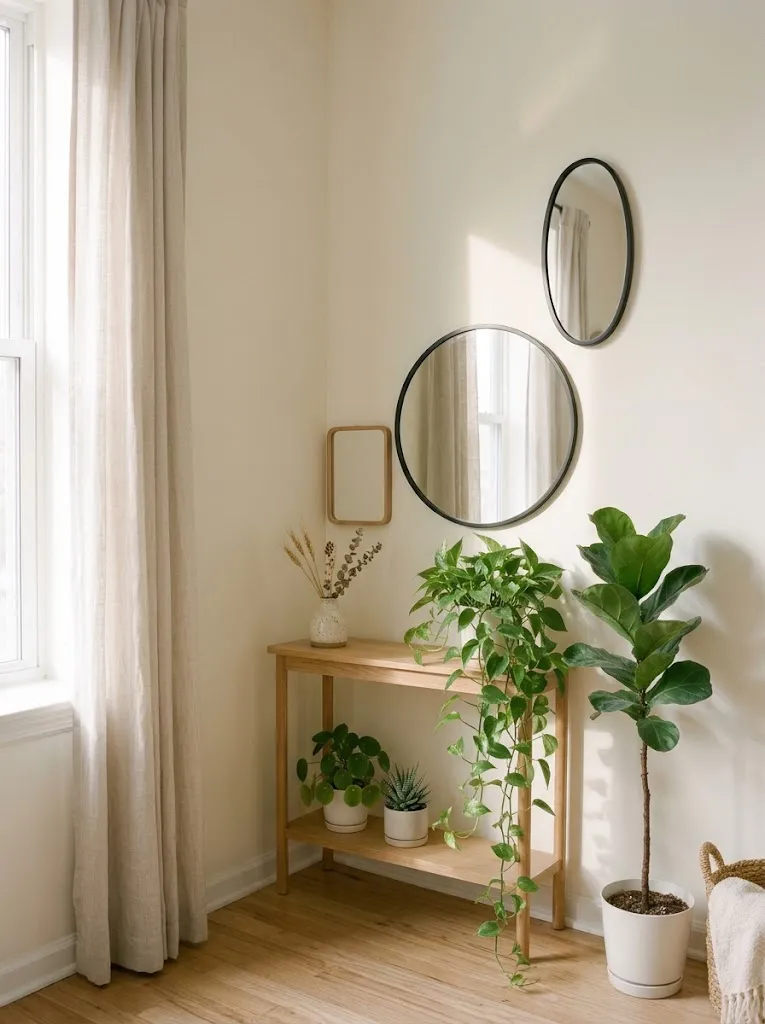
BEFORE: A narrow wall can feel flat and underused, especially when the room has limited floor space. Large artwork may also make the area feel visually heavier.
AFTER: A small arrangement of mirrors adds reflection while keeping the wall visually light. Mix two or three shapes, but keep frame colors coordinated for a polished appearance.
Mirrors work particularly well near windows because they reflect available daylight deeper into the room. For renter-friendly decorating, use removable mounting strips rated for the mirror’s weight or lean a lightweight mirror against a console instead. Leave enough space between frames to keep the arrangement clean.
Slim Storage Console
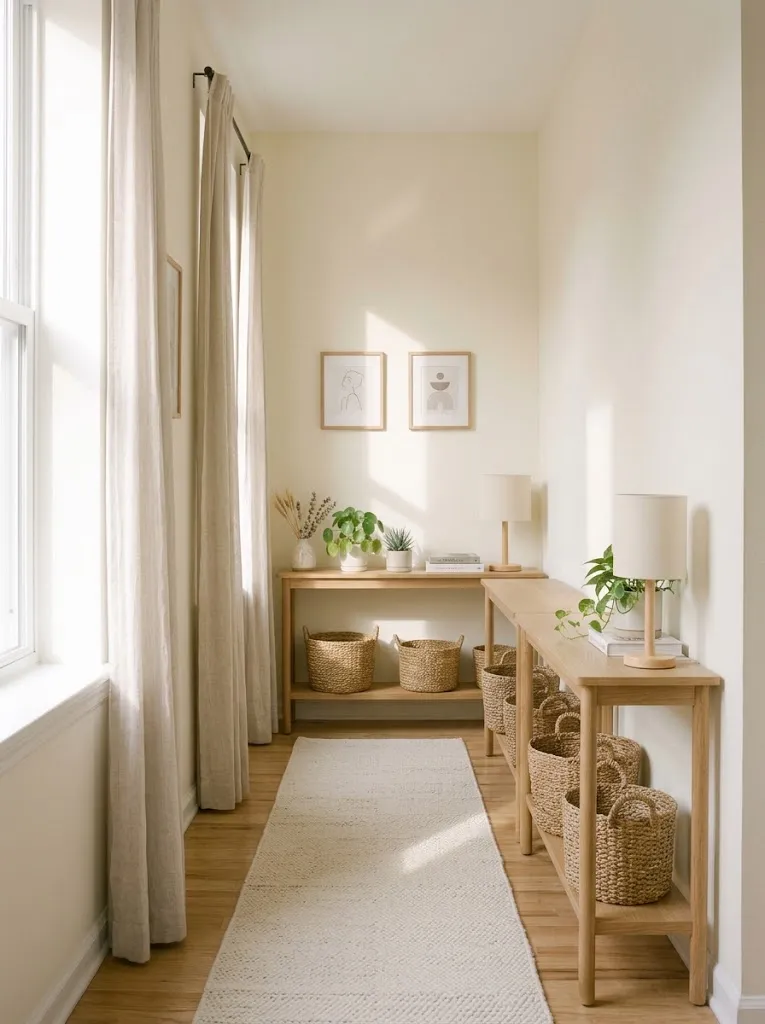
- Measure first: Check the wall width and available depth before buying a console.
- Choose closed storage: Use drawers or cabinet doors to hide keys, mail, chargers, and everyday clutter.
- Keep the top simple: Display one lamp, a small plant, or a single decorative object.
- Use the lower area: Slide baskets underneath for shoes, bags, or extra household items.
A slim console gives you useful storage without taking over a walkway. Look for pieces around 10 to 14 inches deep when space is especially tight. In small entryways, closed compartments are particularly helpful because they keep everyday items out of sight while maintaining a tidy visual line.
Foldable Dining Setup
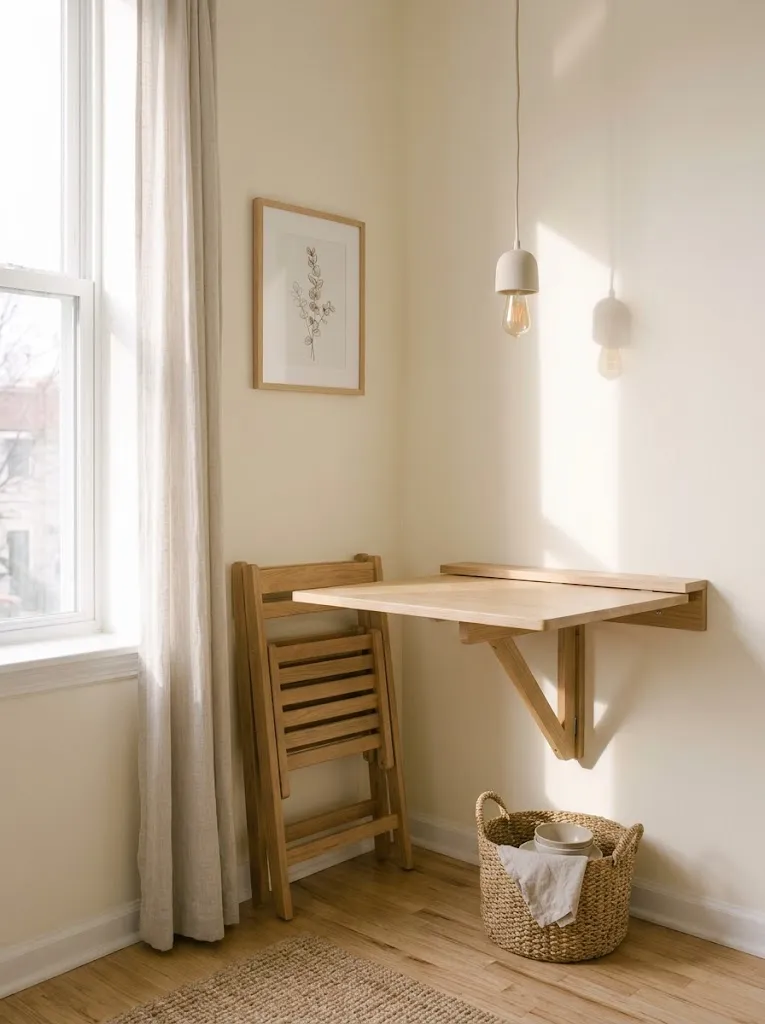
| Feature | Option A: Fixed Table | Option B: Foldable Table |
| Floor Space | Uses space all day | Frees space when folded |
| Best For | Dedicated dining areas | Compact apartments |
| Flexibility | Limited | High |
| Storage | Usually underneath | Can mount directly to wall |
A foldable dining surface can serve as a breakfast table, workspace, or craft station without permanently occupying the room. Choose a sturdy wall-mounted model and pair it with lightweight chairs that can be stored nearby. Keep the tabletop depth practical enough for plates while allowing comfortable movement around it.
Curtain Ceiling Mount
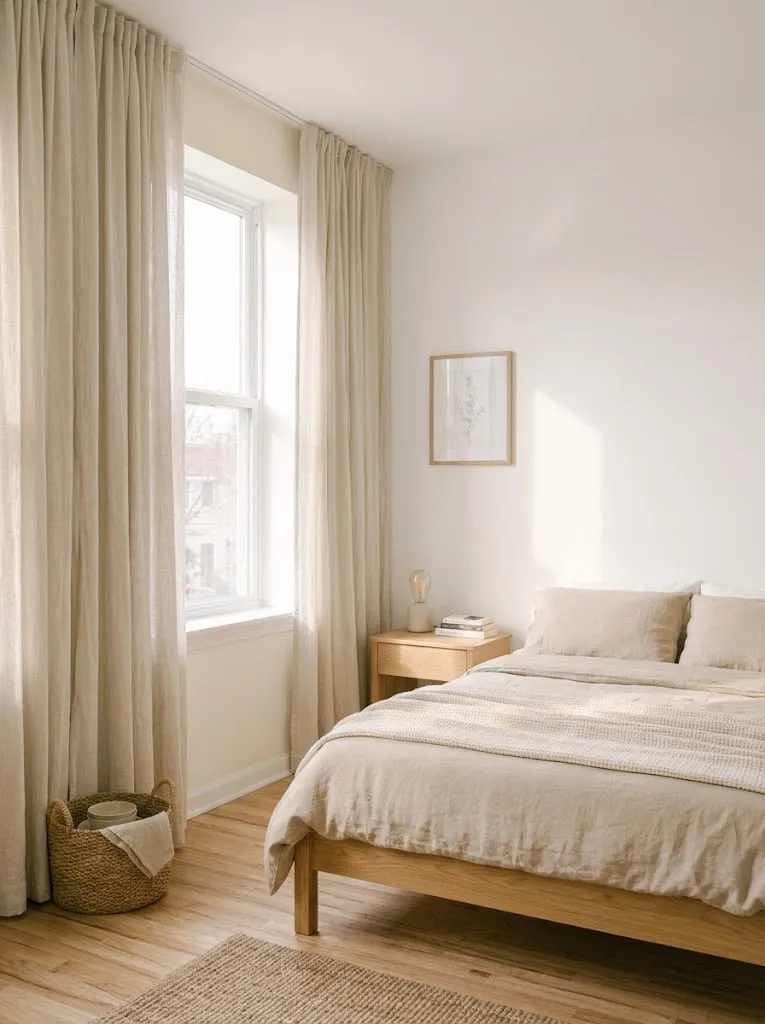
Mounting curtains close to the ceiling draws the eye upward and can make the room feel taller. Choose panels that reach close to the floor, and extend the rod beyond both sides of the window so the fabric can sit outside the glass when opened.
Lightweight linen or cotton-look curtains work well in compact rooms because they soften the window without adding visual heaviness. I’ve noticed that matching the curtain color closely to the wall creates a particularly clean effect, especially in rooms with limited natural light.
Wall-Mounted Nightstand
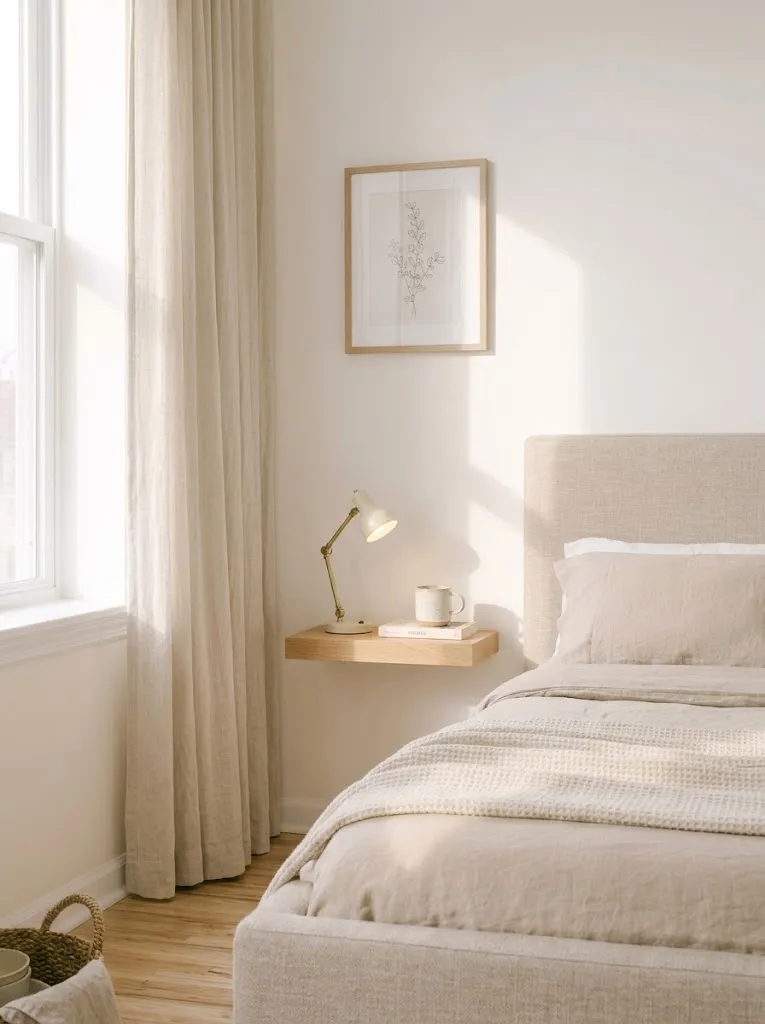
Cost: Low to moderate | Time: 1 to 2 hours | Skill Level: Beginner to intermediate
Best For: Small bedrooms | Storage: Drawer or open shelf
Result: More visible floor space beside the bed
A wall-mounted nightstand removes bulky legs from the floor and creates a cleaner bedside area. It also makes vacuuming easier and gives a small bedroom more visual breathing room. I’ve noticed that a narrow floating shelf with one drawer often provides enough space for a lamp, phone, book, and a few daily essentials.
Multipurpose Ottoman Seating
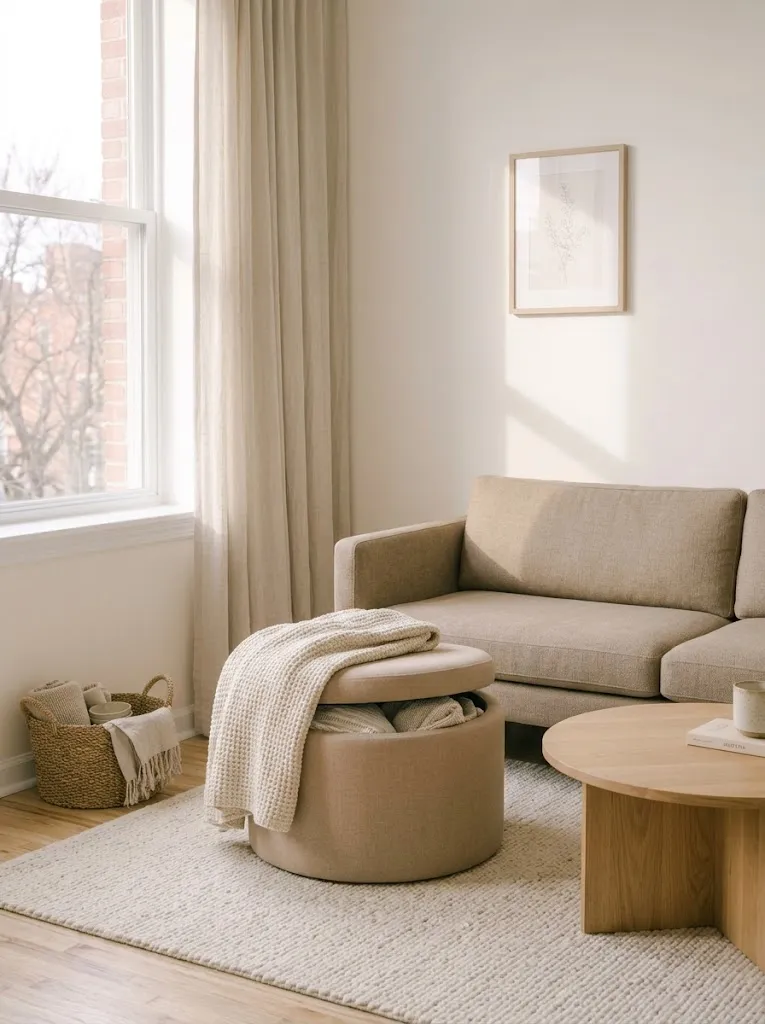
The right ottoman can handle several jobs without adding another large piece of furniture. Use it as extra seating when guests arrive, a footrest during quiet evenings, or hidden storage for blankets and pillows.
Choose a compact rectangular or square design that fits beneath or beside your coffee table when not needed. A firm upholstered top is useful for seating, while a hinged or removable lid adds concealed storage. Neutral fabric also helps the piece blend into different decorating styles.
Floating Picture Ledge
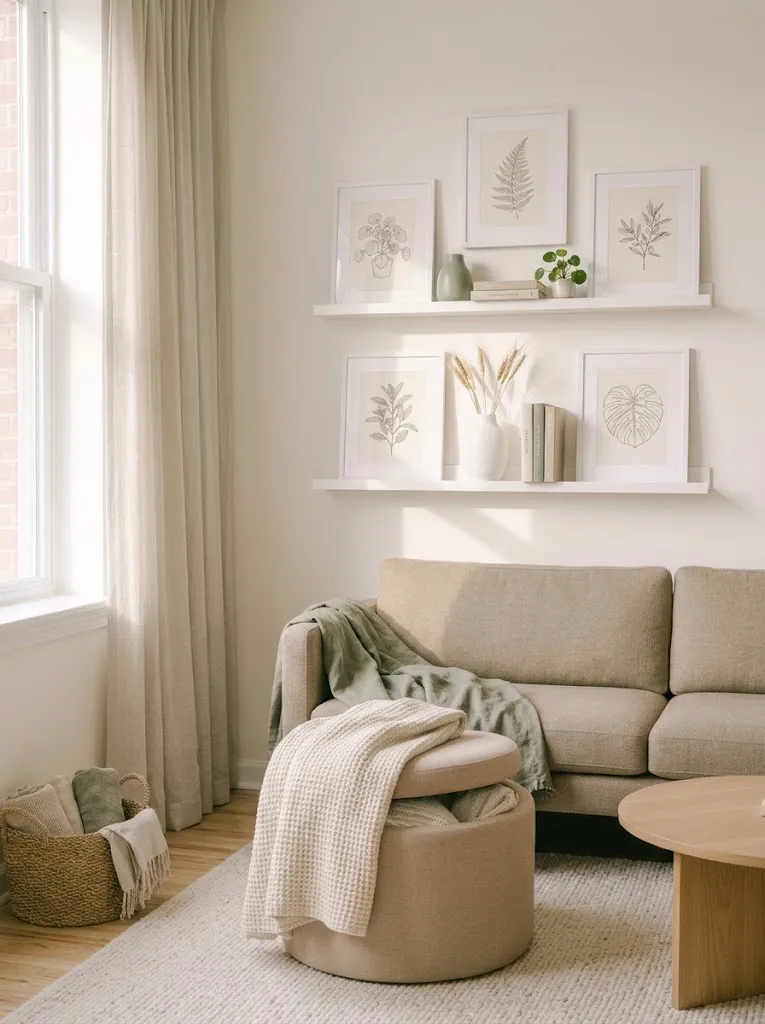
- Start with one narrow ledge before creating a larger arrangement.
- Mix framed prints with one or two small decorative objects.
- Keep the largest artwork toward the center for visual balance.
- Leave some empty space between objects so the display can breathe.
- Use removable mounting solutions when appropriate for rental walls.
A picture ledge gives you flexible wall decor without covering the entire wall with frames. You can swap prints seasonally, adjust the arrangement, or remove the display when moving. For a cohesive look, repeat one color from your furniture or textiles across the artwork and accessories.
Under-Bed Storage
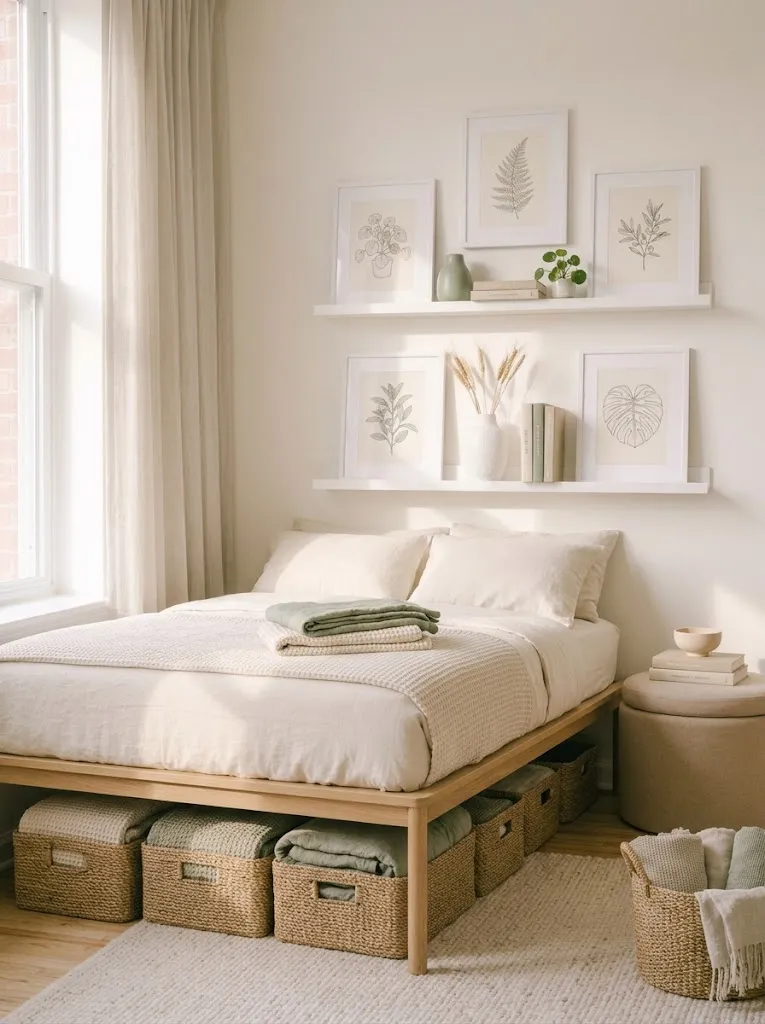
Quick Tip: Measure the clearance under your bed before buying containers. Choose shallow boxes that slide completely underneath and add simple labels so seasonal clothing, spare bedding, and accessories stay easy to find.
Under-bed storage turns an overlooked area into useful hidden space without adding another cabinet. Use lidded containers for items that need protection from dust and breathable fabric boxes for frequently accessed clothing. Keep everyday essentials toward the front and rarely used seasonal items farther underneath.
Compact Entry Hooks
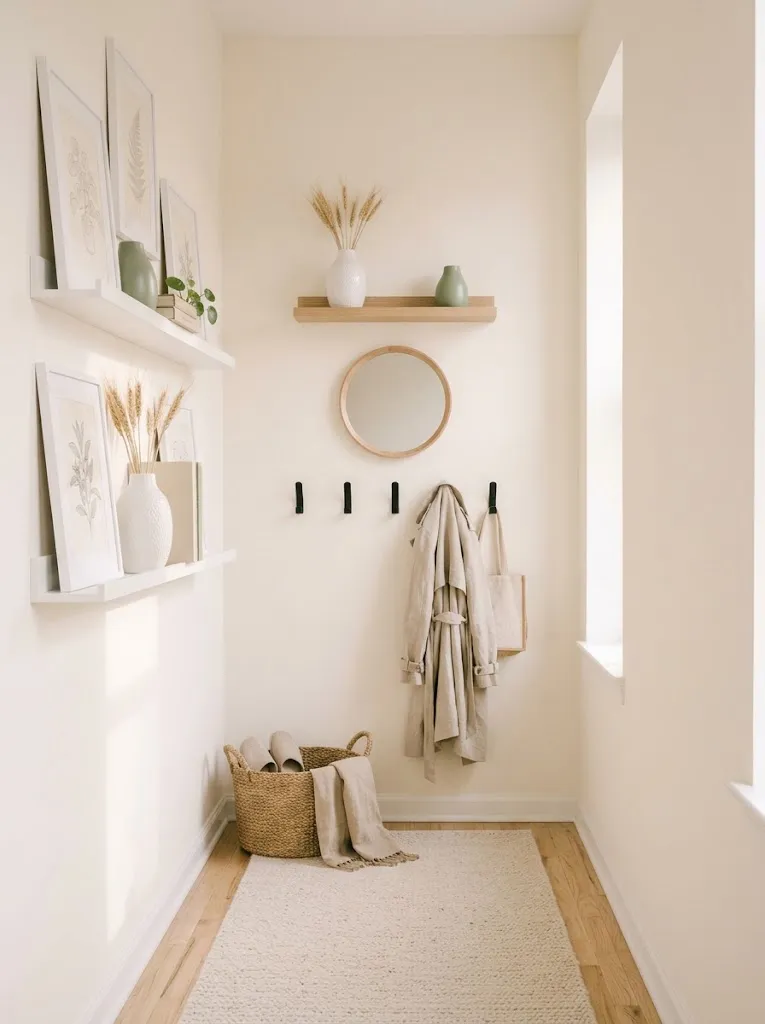
BEFORE: Coats, bags, keys, and hats often collect on chairs or countertops when an apartment lacks an entry closet. The result is clutter concentrated around the doorway.
AFTER: A simple row of wall hooks gives each frequently used item a designated spot. Adding a narrow shelf above creates room for keys, sunglasses, or a small decorative accent.
Keep the hook arrangement simple and install it where everyone can reach it comfortably. For renters, removable adhesive hooks can work for lightweight items when used according to their weight limits. A small basket nearby can collect loose accessories and prevent the entry area from becoming a drop zone.
Statement Wall Art
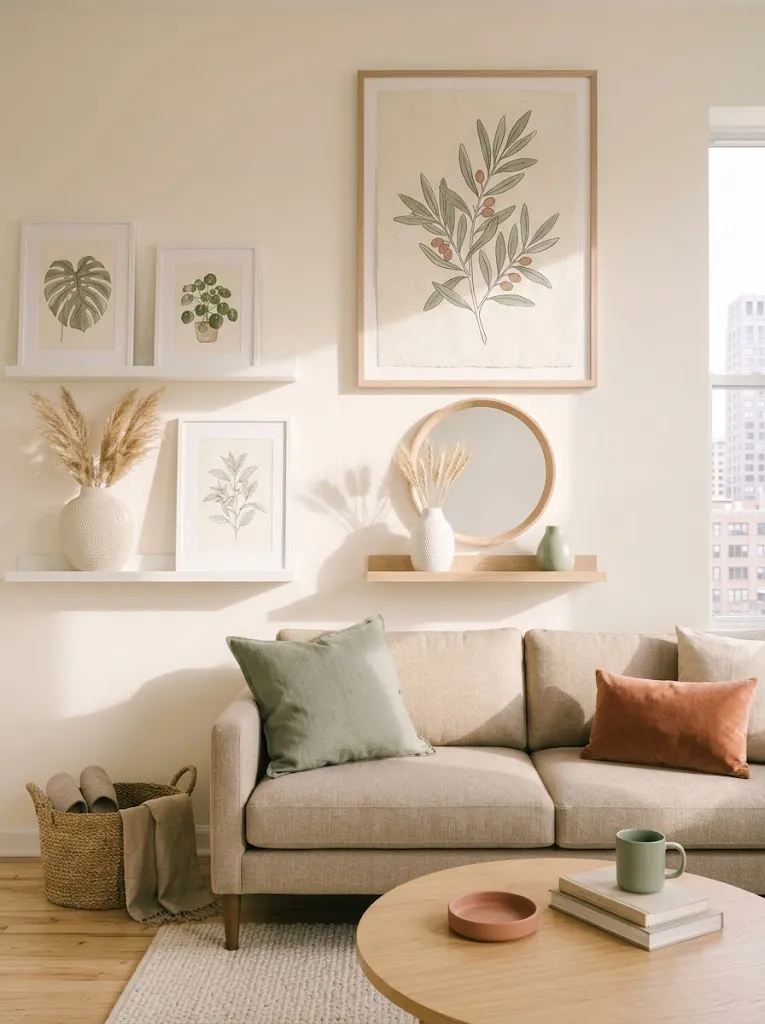
- Pick one focal piece: Choose artwork large enough to anchor the wall without extending beyond the sofa’s visual width.
- Repeat a color: Pull one shade from the artwork into pillows, throws, or small accessories.
- Keep surrounding decor minimal: Let the main piece provide the visual focus.
- Check the height: Hang artwork with its center around eye level for comfortable viewing.
A single strong artwork can give a compact room personality without filling every wall. Choose a print that connects with your existing palette rather than starting with a completely new color scheme. This approach keeps the room cohesive and reduces the need for numerous small decorations that can make limited space feel busy.
Nesting Coffee Tables
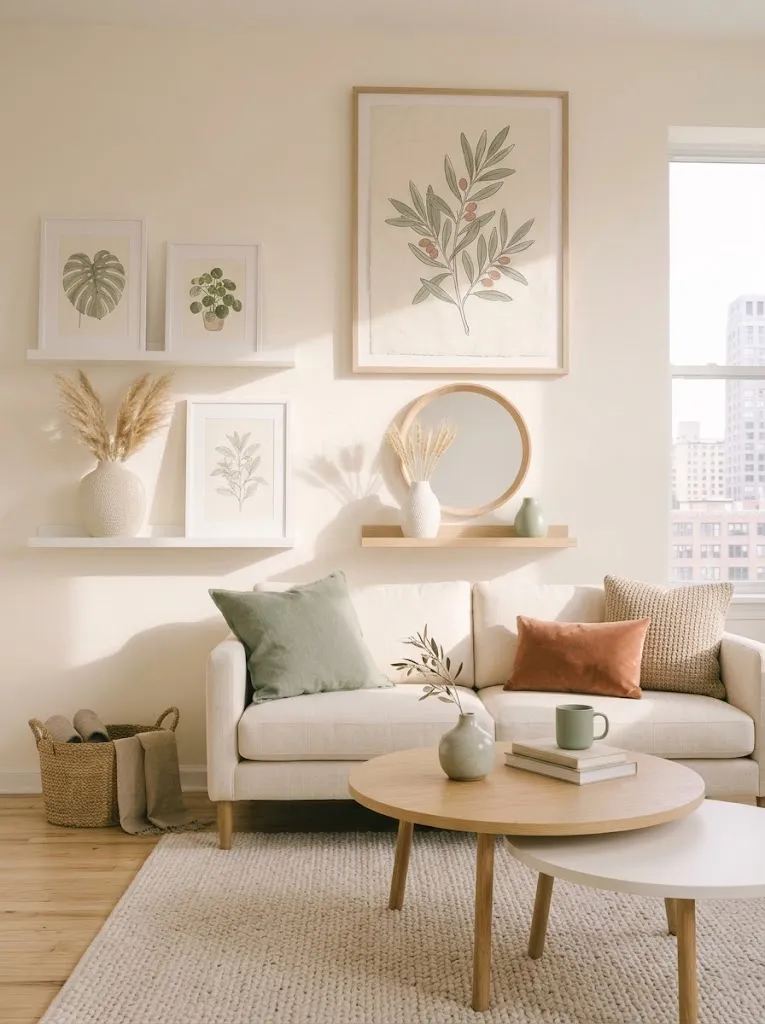
| Feature | Option A: Single Large Table | Option B: Nesting Tables |
| Floor Space | Uses one larger footprint | Smaller footprint when nested |
| Flexibility | Fixed | Expandable when needed |
| Surface Area | One surface | Multiple surfaces |
| Guest Use | Limited | Extra table available |
Nesting tables provide flexibility without permanently using the floor area of a large coffee table. Keep the smaller table tucked underneath during everyday use, then pull it out when serving snacks or hosting guests. Rounded edges are especially useful in tight layouts because they make movement around the seating area easier.
Hidden Basket Storage
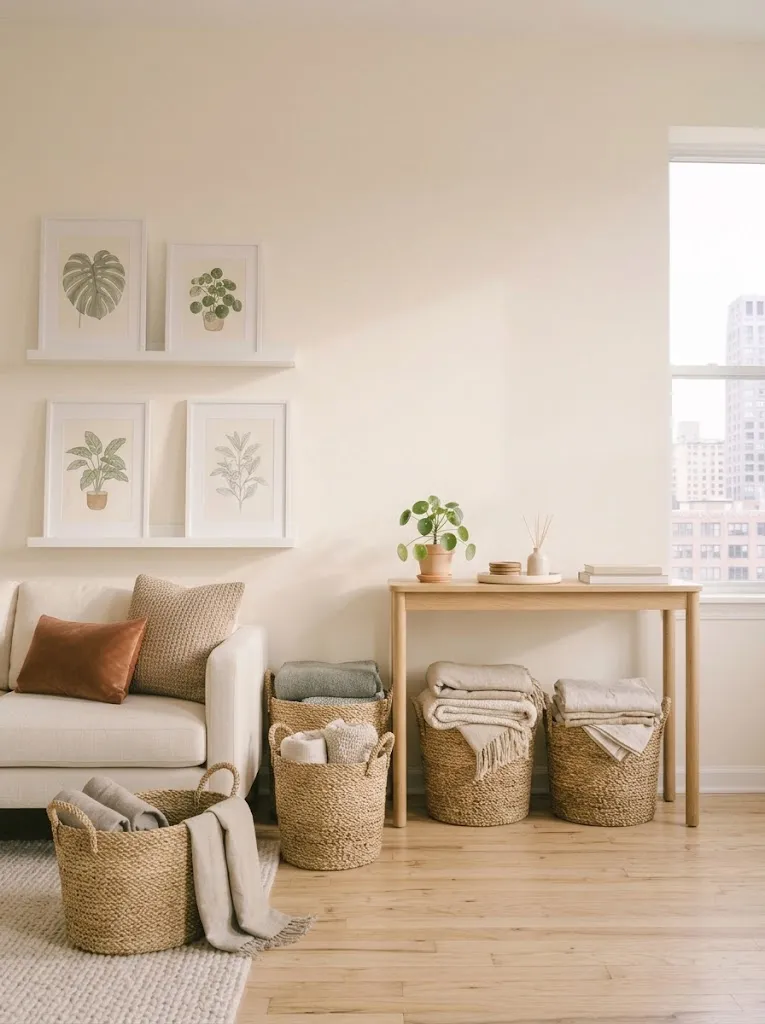
Smart Setup
- Choose baskets that fit the exact shelf or gap available.
- Keep frequently used items in the easiest-to-reach containers.
- Coordinate basket materials with nearby furniture for a unified look.
- Label containers that hold similar items, especially seasonal belongings.
Avoid
- Oversized baskets that block walkways.
- Containers that are difficult to pull from shelves.
- Too many unrelated colors and textures in one corner.
- Hiding everyday essentials in hard-to-reach locations.
Baskets are useful for soft items that tend to wander around a small home. Store throws, extra cushions, toys, or magazines inside them and slide them beneath consoles, open shelving, or unused corners. I’ve seen this work especially well in living rooms because the storage looks decorative while quietly reducing visible clutter.
Slim Floor Lamp
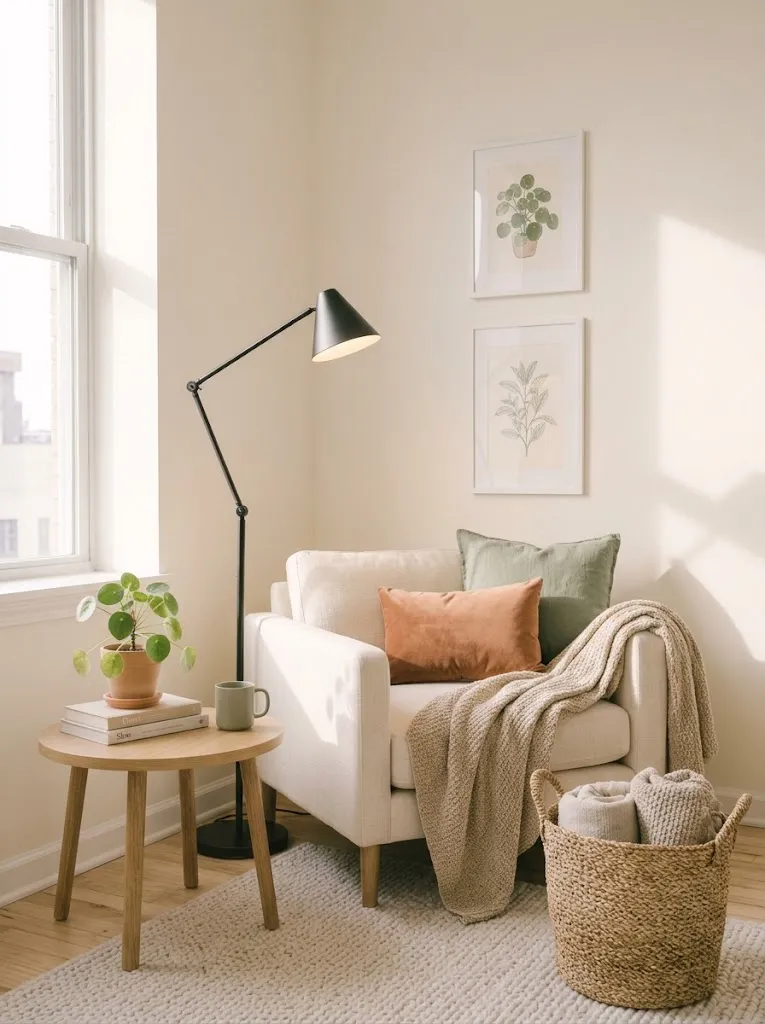
Cost: Low to moderate | Time: 15 minutes | Skill Level: Beginner
Best For: Dark corners and reading areas | Footprint: Very small
Result: Added lighting without occupying table space
A slim floor lamp can brighten a dark corner while taking up very little floor area. Look for a narrow base and an adjustable shade so the light can serve a reading chair, sofa, or work area.
Warm white bulbs usually create a comfortable evening atmosphere, while brighter neutral light can help near a desk. Position the lamp where its cord can stay safely against a wall and away from walking paths.
Open Shelf Zoning
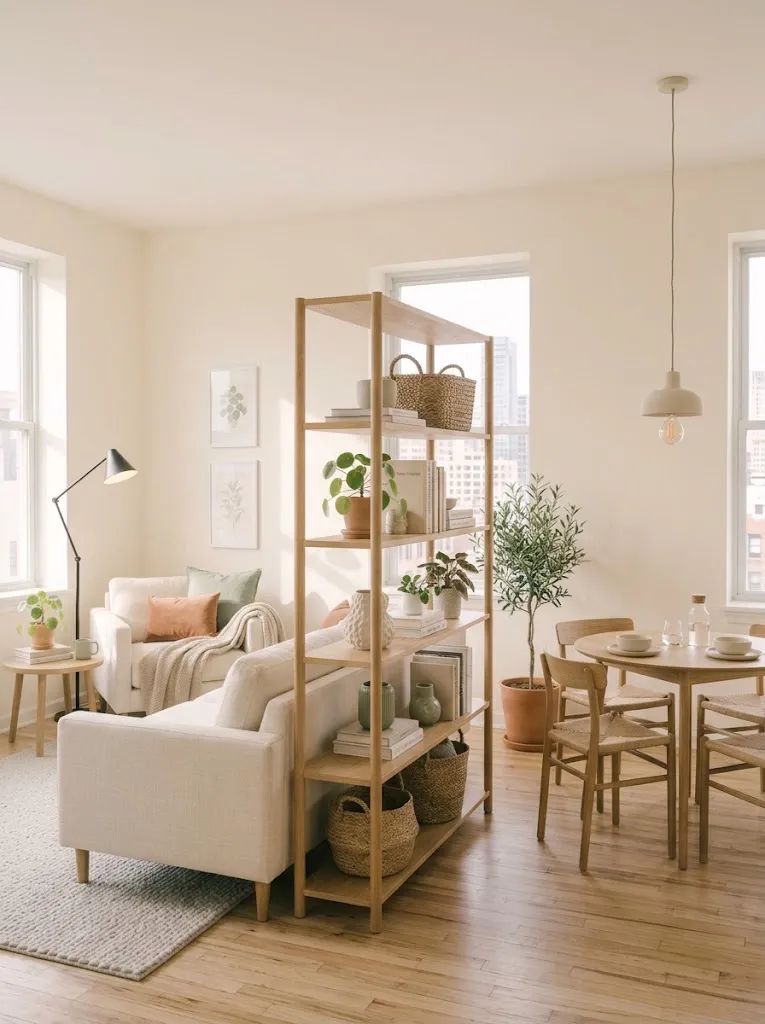
Open shelving can separate areas without making a compact apartment feel boxed in. Place a tall, narrow unit between a sofa and dining space to create visual zones while allowing light to pass through.
Keep the shelves partly open rather than filling every compartment. Combine books, baskets, plants, and a few decorative pieces, leaving visible gaps between groups. This gives the divider a lighter appearance and provides useful storage at the same time.
Light Neutral Palette
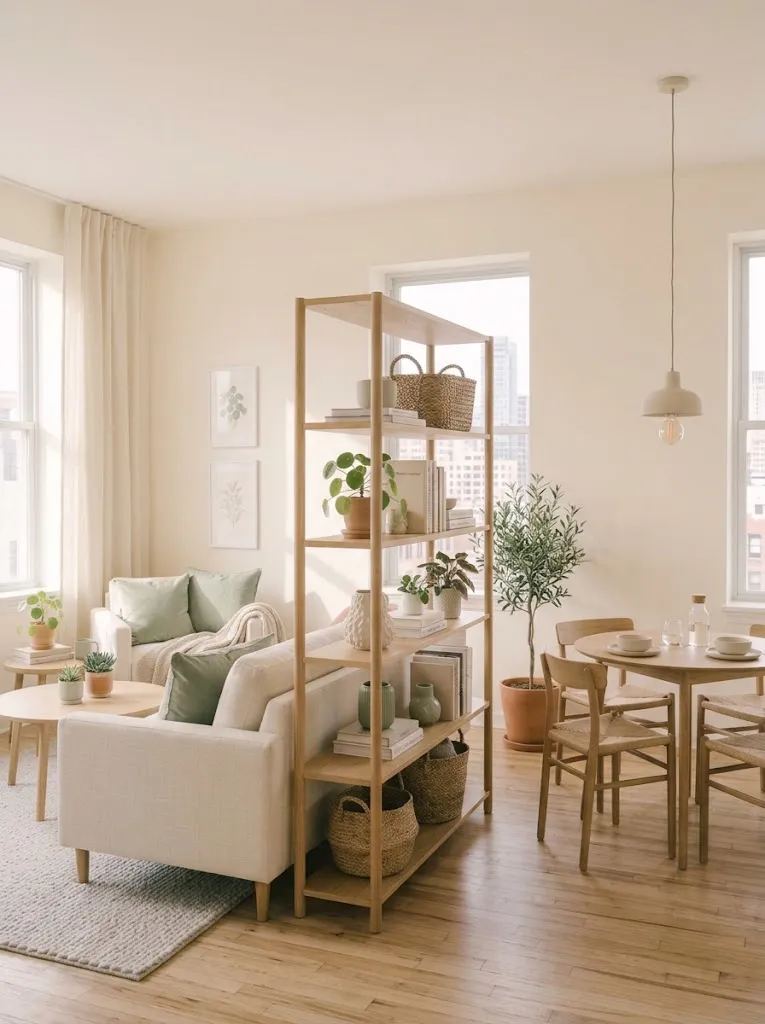
Quick Tip: Build the room around two or three light base colors, then introduce one muted accent shade. Cream, warm white, beige, and pale wood can create continuity, while sage green or muted blue adds controlled contrast.
A light palette helps different areas of a compact home feel connected instead of visually divided. It also reflects more available daylight, which can make darker rooms feel brighter. Add texture through linen, woven baskets, wood, and soft rugs so the space does not become flat or overly plain. Learn more
Corner Workspace
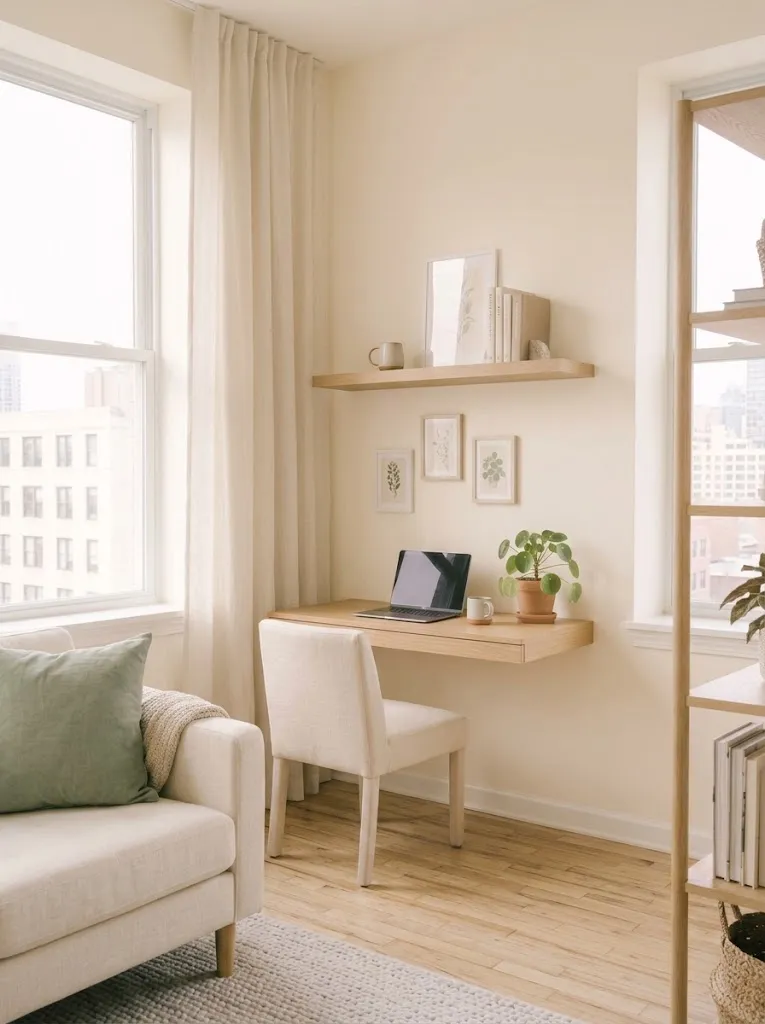
A forgotten corner can become a useful work zone with just a few carefully sized pieces. Start with a narrow desk that leaves enough clearance for the chair, then use the wall above for shelves or a small organizer.
Keep the desktop limited to daily essentials such as a laptop, lamp, notebook, and one decorative object. In my experience, reducing visual clutter is just as important as saving physical space when creating a comfortable work area.
Sliding Door Panels
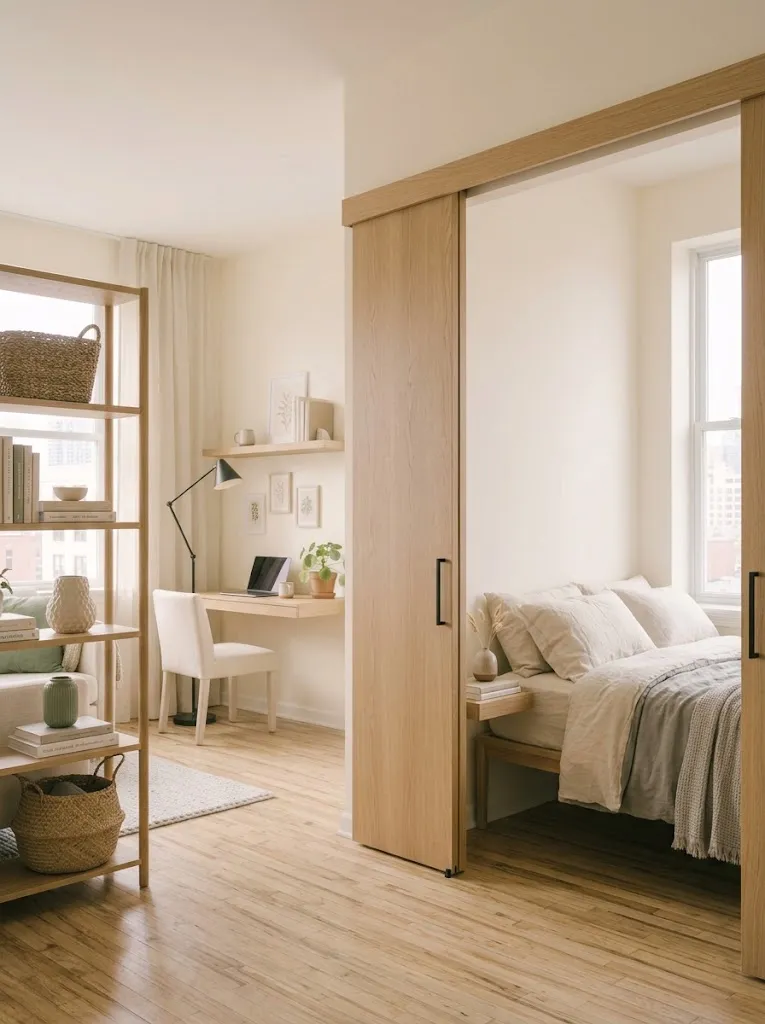
- Measure carefully: Check the wall and doorway dimensions before choosing a sliding system.
- Choose a light finish: Pale wood or soft neutral panels can maintain an airy appearance.
- Keep hardware simple: Slim handles and minimal tracks reduce visual clutter.
- Plan clearance: Make sure furniture does not interfere with the door’s sliding path.
- Use the divider strategically: Separate sleeping, working, or dining areas when privacy is useful.
Sliding panels can provide separation without requiring the swing space of a traditional door. They are particularly useful in studio apartments where one room serves several purposes. If installation requires permanent changes to the property, check your rental agreement first and consider freestanding alternatives.
Wall-Mounted Lighting
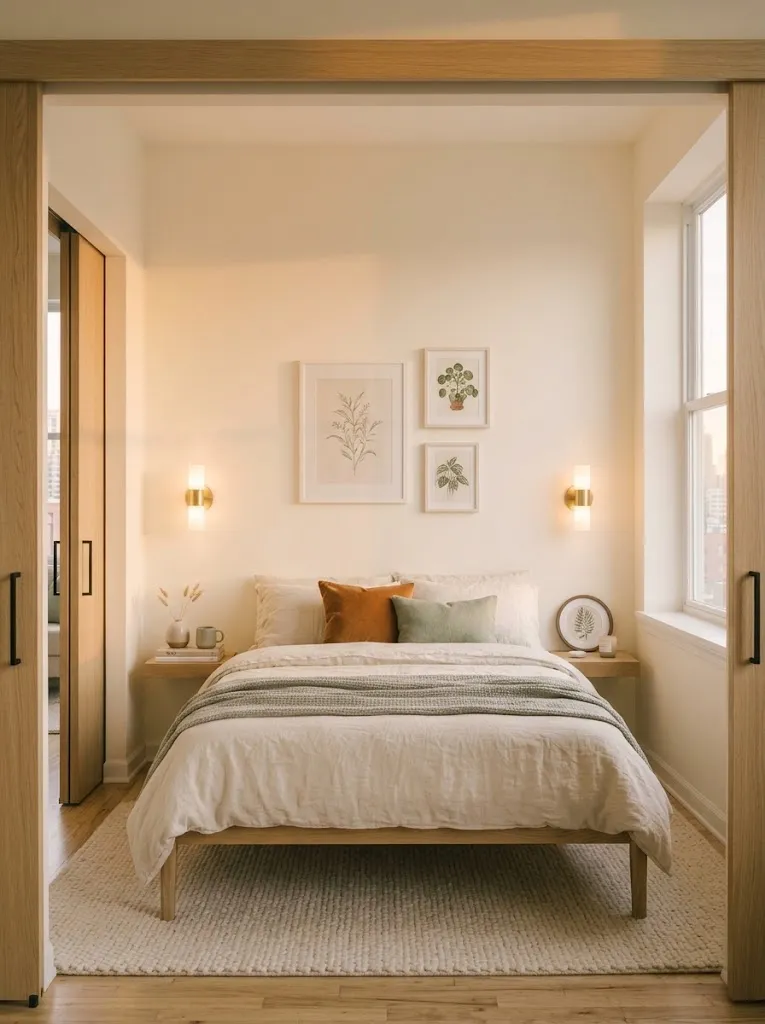
Quick Tip: Place wall lights where they illuminate the activity you actually perform, such as reading beside the bed or working at a desk. Choose adjustable fixtures when possible, and check whether your rental allows hardwired installation before purchasing.
Wall-mounted lighting frees up valuable surfaces that table lamps would occupy. The cleared nightstand can then hold only essentials, while the light fixture becomes part of the room’s decor. Plug-in sconces are especially practical for renters because they can provide a similar look without requiring permanent electrical changes.
Multi-Level Shelving
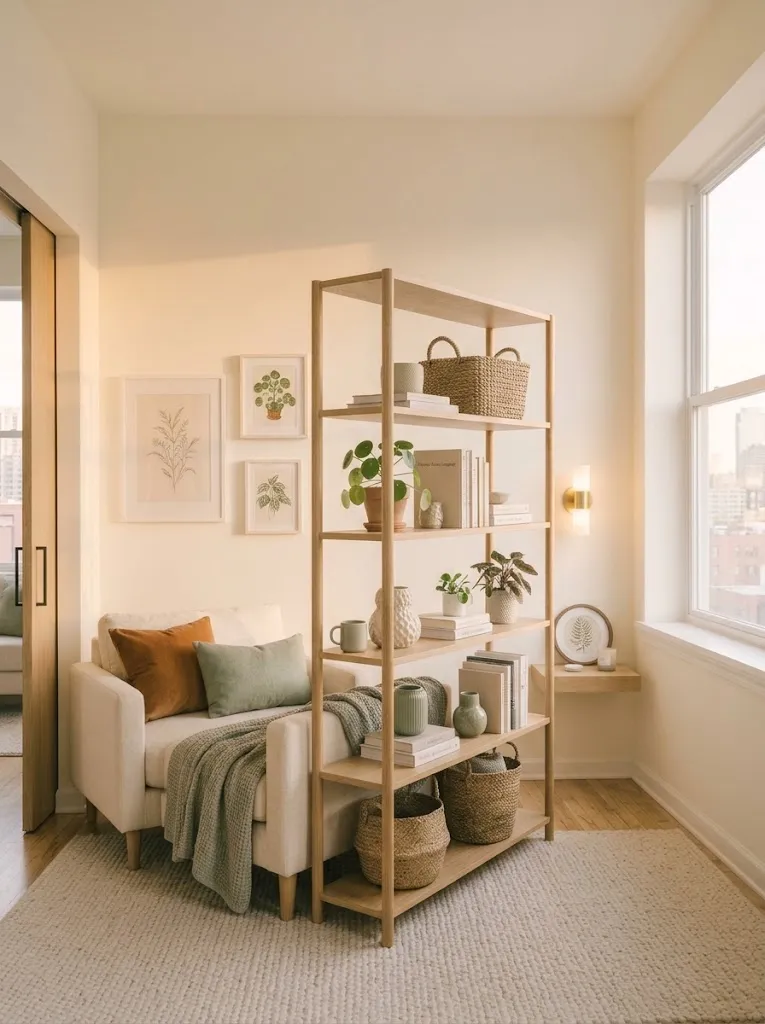
BEFORE: Floor space is limited, so adding another wide cabinet can make the room feel crowded. Small belongings may also end up scattered across tables and countertops.
AFTER: A tall shelving unit uses vertical space while keeping the floor footprint narrow. Different shelf heights create dedicated spots for books, baskets, plants, and decorative objects.
Keep heavier items on lower shelves and lighter decorative pieces higher up for practical balance. Leave some shelves partially empty rather than filling every level. For rental homes, secure tall furniture appropriately when required, especially in households with children or pets.
Foldable Accent Chairs
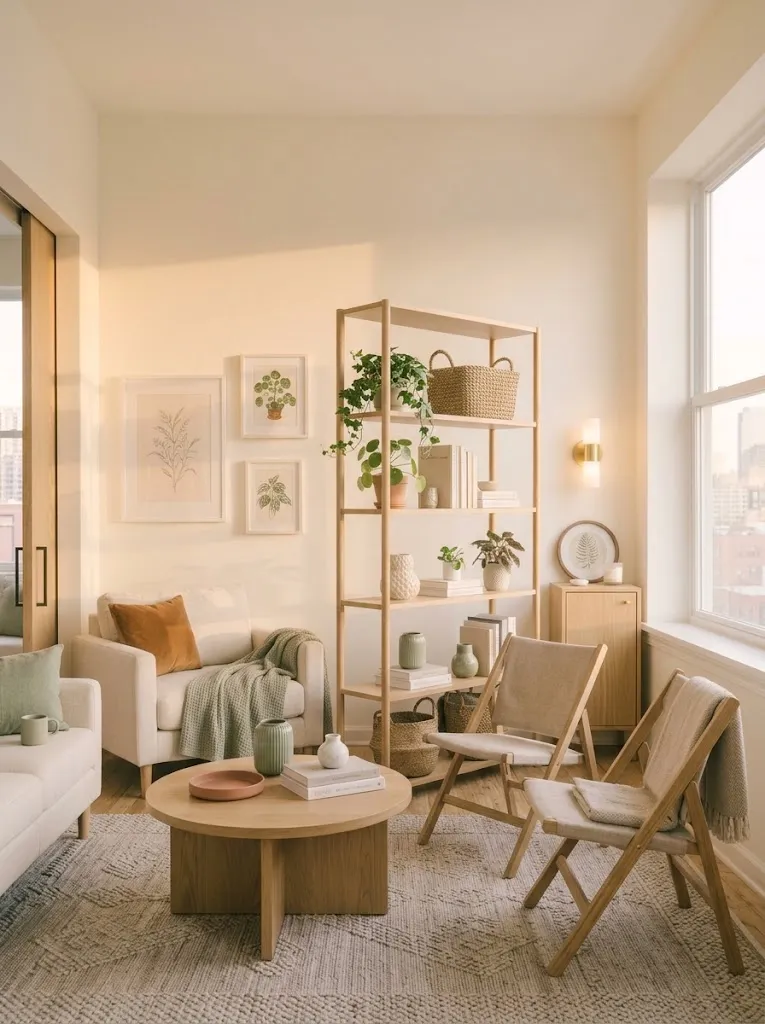
- Choose easy storage: Pick chairs that fold flat or stack neatly when not needed.
- Match the palette: Neutral upholstery keeps temporary seating from looking visually heavy.
- Position strategically: Keep chairs near the main seating area when guests arrive.
- Check comfort: A compact chair still needs proper back support and a stable frame.
- Store safely: Use a closet, wall hook, or designated corner rather than leaving folded chairs in a walkway.
Extra seating does not need to remain in the room every day. Foldable chairs give you flexibility for visitors while preserving valuable floor space during normal routines. Keep two nearby for occasional gatherings, then fold them away when you need more room for cleaning, exercising, or simply moving around comfortably.
5 FAQs About Small Apartment Decorating Ideas
1. How can I make a small apartment look bigger?
You can make a small apartment look bigger by using light colors, adding mirrors, choosing furniture with slim profiles, and keeping walkways clear. Floor-to-ceiling curtains and vertical shelving also draw the eye upward, creating the impression of a more spacious room.
2. What are the best decorating ideas for a small apartment on a budget?
Some budget-friendly ideas include rearranging existing furniture, adding throw pillows, displaying plants vertically, using woven baskets for storage, and creating a gallery wall with affordable prints. Removable wall hooks and floating picture ledges can also improve functionality without requiring major renovations.
3. How do I maximize storage in a small apartment?
Maximize storage by using the space under your bed, installing wall-mounted shelves, choosing storage ottomans, and adding slim consoles with drawers. Foldable furniture and decorative baskets can also help keep everyday belongings organized without taking up unnecessary floor space.
4. How can renters decorate a small apartment without damaging the walls?
Renters can use removable adhesive hooks, lightweight decor, freestanding shelves, leaning mirrors, plug-in wall lights, and peel-and-stick accessories where permitted. Always check product weight limits and your rental agreement before installing anything that could damage walls or other surfaces.
5. What furniture works best in a small apartment?
Multifunctional and compact furniture works best in small apartments. Consider nesting coffee tables, foldable dining tables, storage ottomans, wall-mounted nightstands, slim floor lamps, and foldable accent chairs. Choose pieces that suit your room dimensions and serve more than one purpose whenever possible.
Conclusion
A small apartment does not have to feel crowded or lack personality. With thoughtful furniture placement, smart storage, flexible pieces, and intentional decor, even limited rooms can become comfortable and inviting.
The best small apartment decorating ideas are the ones that fit your lifestyle, budget, and available space. Start with one change that solves a real problem, then build from there. I’ve seen how small adjustments can completely shift the way a room feels and functions.
Save this post on Pinterest so you can return to these ideas when you’re ready to refresh your home. Try your favorite ideas, make them your own, and share this article with someone who could use more style and function in a compact space.
2 Comments